



Author: dblauadmin
April 5, 2016 — May 6, 2016
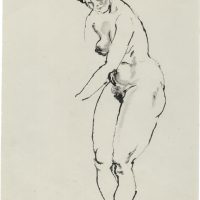
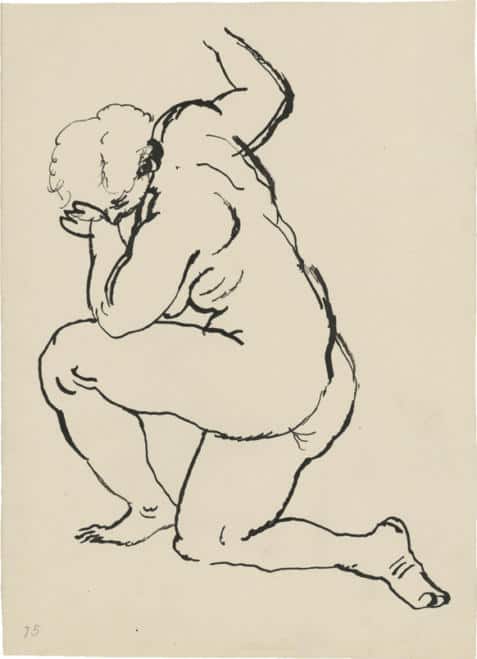
We are happy to present a small exhibition of George Grosz’s early drawings.
Opening times are from Monday – Friday 11 – 6 pm.
Unsere Öffnungszeiten sind von Montag – Freitag von 11 – 18 Uhr.

May 19, 2016 — May 22, 2016
The Labyrinth
Anthropos apteros for days
Walked whistling round and round the Maze,
Relying happily upon
His temperment for getting on.
The hundreth time he sighted, though,
A bush he left an hour ago,
He halted where four alleys crossed,
And recognized that he was lost.
“Where am I? Metaphysics says
No question can be asked unless
It has an answer, so I can
Assume this maze has got a plan.
If theologians are correct,
A Plan implies an Architect:
A God-built maze would be, I’m sure,
The Universe in miniature.
Are data from the world of Sense,
In that case, valid evidence?
What in the universe I know
Can give directions how to go?
All Mathematics would suggest
A steady straight line as the best,
But left and right alternately
Is consonant with History.
Aesthetics, though, believes all Art
Intends to gratify the heart:
Rejecting disciplines like these,
Must I, then, go which way I please?
Such reasoning is only true
If we accept the classic view,
Which we have no right to assert,
According to the Introvert.
His absolute pre-supposition
Is – Man creates his own condition:
This maze was not divinely built,
But is secreted by my guilt.
The centre that I cannot find
Is known to my unconscious Mind;
I have no reason to despair
Because I am already there.
My problem is how not to will;
They move most quickly who stand still;
I’m only lost until I see
I’m lost because I want to be.
If this should fail, perhaps I should,
As certain educators would,
Content myself with the conclusion;
In theory there is no solution.
All statements about what I feel,
Like I-am-lost, are quite unreal:
My knowledge ends where it began;
A hedge is taller than a man.”
Anthropos apteros, perplexed
To know which turning to take next,
Looked up and wished he were a bird
To whom such doubts must seem absurd.
_________________________________
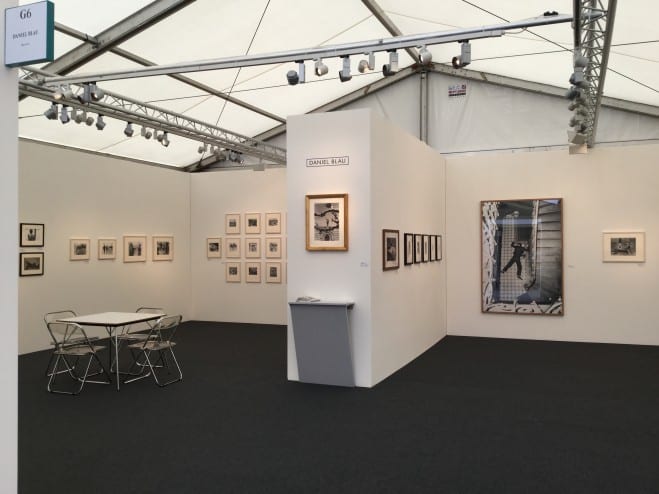
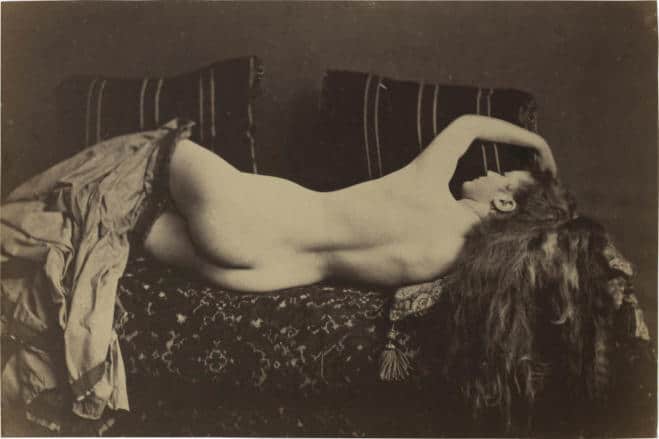
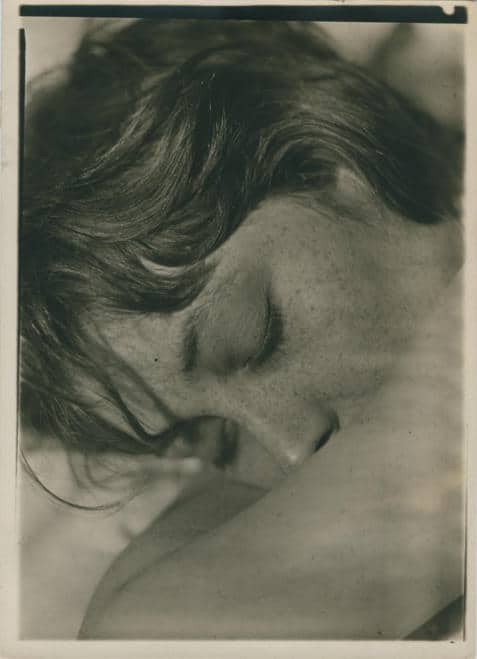
Daniel Blau is pleased to present Anthropos at Photo London, an exhibition revealing the human body through physical or political gesture. Movement and gesture have captured artists’ imagination from time immemorial. The artworks presented here all share the exceptional ability to capture various forms of gesture from posed, formal portraits to iconic, candid moments. Indeed, this year’s selection includes a photogram, where the human body had direct contact to light-sensitive material, impressing its outline on the work. The photogram (nudogram) presented here is a unique large-scale work by Floris Neusüss from 1964. This photographic imprint echoes the earliest experiments made by notable pioneers such as Anna Atkins in their cameraless processes, where the work has an inimitable quality and directness.
Photography’s ability to preserve and document was recognised at the point of its invention. Movement posed problems for photographers due to the long exposure times required, thus sculpture and architecture provided photographers suitable subjects. Our 19th century selection includes a spectacular albumen print taken by James Anderson in 1855 of Laocoön and his sons being seized by snakes. Set against a black background, the sculpture obtains a strong theatrical presence. Further 19th century works include Édouard Baldus’ exceptional photographs of statues in the Louvre as well as the Fratelli Alinari’s work and a selection of works by Giorgio Sommer of the human casts from Pompeii. Sommer’s photographs preserve and catalogue the remains of Mount Vesuvius’ eruption from 79 AD, which destroyed and buried the ancient town along with its inhabitants. These early works demonstrate the distinctive engagement with the aesthetic gestures in art and underline the long-standing interplay between the media of photography and sculpture.
Moving into the 20th century, we explore artists whose work oftentimes reintroduces historical methods (direct impressions of objects made onto light-sensitised material) to a contemporary practice: The London-born Adam Fuss’ photogram of a floating baby reflects the aforementioned early photographic explorations of sculpture. As Fuss traces the baby’s outline and the water’s rippling movement he produces a unique and evocative work outlining the human form.
Political gestures are best described through examples such as an early work by Anselm Kiefer from his Occupations series, which is shown alongside various press photographers, unique vintage prints by Weegee, and finally, a selection of vintage NASA prints showing astronauts floating in space. Where Kiefer’s work questions art’s existence and function since fascism, Weegee’s unstoppable urge to capture life’s (and death’s) dramas shows photography’s outstanding ability to fix instances otherwise perhaps invisible to the eye. Combining both sculptural and political qualities, the vintage NASA prints of spacewalks (from the Gemini missions), show dreamlike moments of human weightlessness.
This selection of artists shows the numerous points of intersection between the ‘political body’ and the ‘artistic gesture’.
Somerset House,
Stand G6
Preview Day: 18th of May
The fair is open from the 19th – 22nd of May, 2016.
“The Labyrinth” by W. H. Auden, 1940
Copyright © 1945 by W. H. Auden, renewed, reprinted by permission of Curtis Brown, Ltd.
March 11, 2016 — March 20, 2016
We shall not cease from exploration
And the end of all our exploring
Will be to arrive where we started
And know the place for the first time.
– Verse V from Little Gidding (1942) – T. S. Eliot
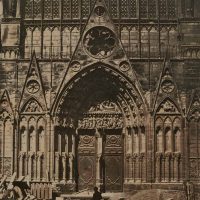
TEFAF is the occasion at which we introduce our most exquisite artworks, which in many instances are collected over years, enabling us to contextualise and often premiere these as groups at the fair. In introducing unique or previously unrecognised photographic objects to the public, our experience and research-expertise distinguish us as a gallery. Continue reading “Tefaf 2016”
February 21, 2016 — March 29, 2016
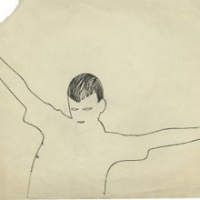
The king of pop art, a universally renowned and hugely influential 20th century artist, whose work is continually exhibited, Andy Warhol (1928 -1987) was prolific: he worked in painting, photography, cinema, television and performance, and as a music producer and magazine editor. Warhol’s career began in 1949, when he moved to New York. He was then working as an illustrator for various magazines and his first commissions were as an adman. The 1960s would be his glory days – his tins of Campbell’s soups and portraits of celebrities even attained iconic status. His earliest artwork dates back to the 1950s. Warhol was then practicing his draughtsmanship, copying out photographs found in the American magazine LIFE. These drawings remained unrecognised until they were discovered in 2011 by the German gallery owner Daniel Blau. Over a hundred of them have been brought back together in this exhibition, which casts new light on the wellsprings of Warhol’s work. Through drawing, Warhol developed a visual language, sublimating reality and exploring the idea of a body of work that is both iconic and reproducible.
Public guided tours and lectures are held periodically at the museum.
On request, guided tours can be arranged for groups of up to 25 people.
Please make your reservations by phone or email, at least one week in advance!
Contact
Musée des beaux-arts
Marie-Anne-Calame 6
CH – 2400 Le Locle
T +41 (0)32 933 89 50
mbal@ne.ch
Opening Times
Wed-Fri 12.30 – 17.00
Sat-Sun 11.00 – 17.00
For further information please click here to visit the museum’s website.
***
February 1, 2016 — February 29, 2016
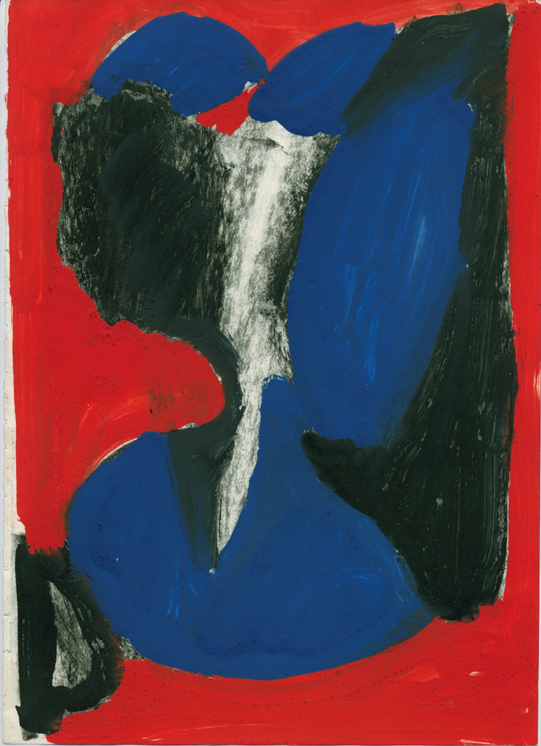
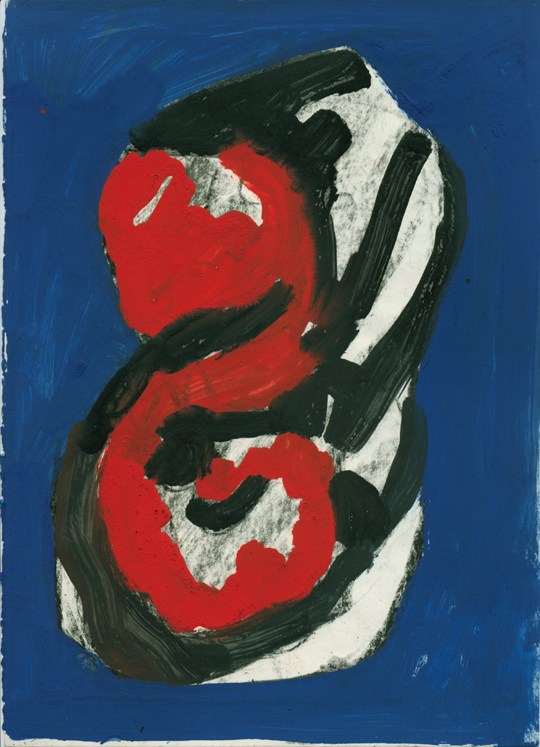
An exhibition of works on paper by A.R. Penck
1 – 29th of February, 2016
Daniel Blau
Maximilianstr. 26
80539 Munich
Open from Monday to Friday from 11 am to 6 pm.

November 12, 2015 — November 15, 2015
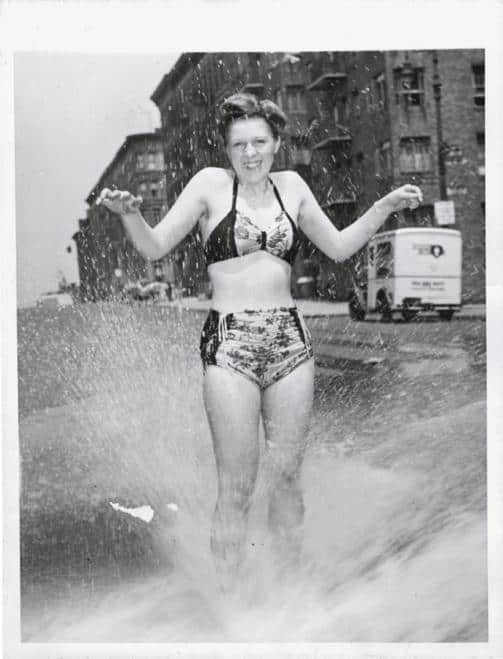
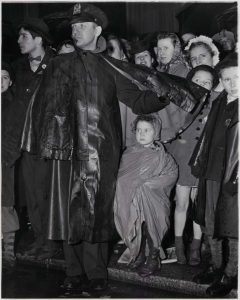
Extra! Weegee features new discoveries as well as famous icons of Arthur “Weegee” Fellig’s legendary photographs.
Weegee’s unstoppable energy and photographic mastery grants him his prominent position in both artistic photography as well as in photojournalism. His famous use of a flashgun created what he termed “Rembrandt lighting” – a highly contrasted chiaroscuro effect which simultaneously heightened and accentuated visual details,rendering crime scenes less gruesome whilst maintaining photojournalistic standards for print. Weegee’s visions are unique: often showing nocturnal scenery. His varied themes have inspired generations of photographers. Whether visiting a gala event or racing to a crime scene, Weegee’s interest was often directed at onlookers’ reactions rather than at the spectacle itself. His pictures highlight the sensationalist and voyeuristic elements inherent in photography.
We are particularly pleased to reaffirm Weegee’s ongoing relevance as a creative force in this ensemble of vintage prints from the 1930s and 40s that we are presenting at Paris Photo this year.
_________________________
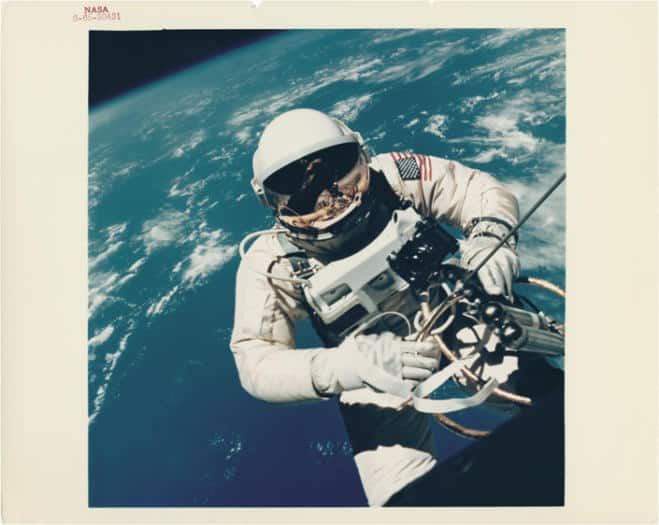
Daniel Blau features breathtaking photographs taken in orbit 50 years ago.
On March 18th, 1965, the Russian cosmonaut Alexey Leonov was the first human to step out of a spaceship during the Voshkod II mission. His 12 minute space walk marked a new level in the already heated competition between the Soviet Union and the United States. It was only a few months later on June 3rd, that Ed White made his space walk debut. This initiated the photographic narratives of the space race between the two superpowers. The camera has always been a silent partner in space. Photography, constantly redefining itself and our perceptions of reality, has played a decisive role in conveying the magnitude of mankind’s achievements. These pictures continue to impact our cultural, spiritual and political understanding of our environment and universe.
_________________________
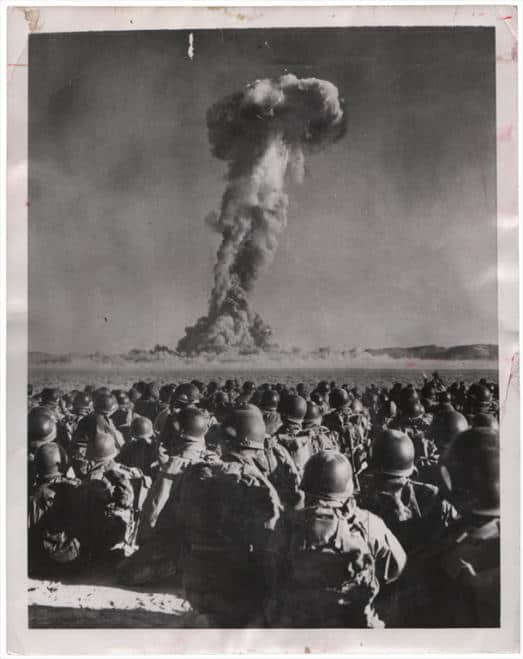
Daniel Blau presents universally awe-inspiring photographs of nuclear explosions.
At 5:30 am on July 16th, 1945, the silence of the New Mexico desert was shattered by the blast of the first nuclear test, code-named ‘Trinity’. It irrevocably changed the world, ushering in the Atomic age. The light emitted by the explosion was sufficient to cause temporary blindness to an observer just half a mile away. Daniel Blau’s focus at this year’s Paris Photo is directed towards photographs of American nuclear tests from the 1940s and 50s.
Life Is Not a Test shows a unique selection of rare vintage prints of test explosions in the Pacific as well as the Nevada desert. These spectacular photographs reveal man’s most destructive forces at work and point to the fusion of art, history and technology caused by collisions of political and ideological differences. These photographs stand as a testimony to the history behind the study of the atom, which began centuries ago with philosophers investigating the structure of matter. It was the Greek philosopher Democritus (ca. 460 – 370 BC) who first formulated a hypothesis on the existence of atoms. The intersections between aesthetics, science and philosophy are dramatically demonstrated in these photographs of atomic explosions.
Exhibition: November Thurs. 12th – Sat. 14th, 12 – 8 pm, Sun. 15th / 12 – 7 pm.
at Grand Palais
Avenue Winston Churchill, 75008 Paris
November 7, 2015 — November 22, 2015
A special exhibition on the occasion of the Festival Photo Saint-Germain.
Sofia Valiente received her BFA in Art from Florida International University in Miami, Florida in 2012. Her first book, Miracle Village, was published during her tenure in the prestigious photography department of the residency program Fabrica in Treviso, Italy. Miracle Village, first exhibited at Daniel Blau gallery in London, recounts the personal journeys of sex offenders living in seclusion within the purpose-built community on the outskirts of a rural town in an impoverished area of Palm Beach County, Florida.
The project houses over 100 sex offenders. Florida’s stringent legislation requires offenders to live a minimum of 1,000 feet from any place where children congregate, many municipalities extend this law to increase the distance to 2,500 feet.In practice this becomes extremely difficult to abide by, leaving many offenders struggling to find housing and re-establish their lives in society. The village, founded by a Christian ministry, seeks to help offenders that have no place to go.
For over a year Valiente befriended, lived among and photographed the residents of Miracle Village where they shared their stories of estrangement, solitude and rehabilitation.Valiente’s work has, for the first time, given these outcasts whose lives are forcibly connected by their offences and shared stigma, a voice and identity. The undeniable artistic merits of the Miracle Village project lie not only in the exquisite photographic compositions, but in Sofia’s candid portrayal of the feared and ostracised. The photographs, which are both captivating and unsettling, are accompanied by equally striking stories in her critically-acclaimed book.
Sofia Valiente is represented by the Daniel Blau Gallery in London/Munich – her work has been exhibited in London and at New York’s AIPAD fair as well as various museum group shows in Miami. She recently received a World Press Photo award for Miracle Village (1st prize, Portraits, Stories). She is also a recipient of the 2015 South Florida Cultural Consortium Artist Fellowship and Burn Magazine’s first Young Talent Award. Sofia is currently based in South Florida, USA.
_________________
Muck city road. Près de 10 km de route abandonnée. Il y a une drôle d’odeur dans l’air. Un mélange de barbe à papa et de fumée.
Les champs de canne à sucre couvrent le paysage à perte de vue. Cinq kms plus loin et à côté d’un village il y a des rails d’une ligne de chemin de fer. Les locomotives y passent à minuit. Le bruit de leurs turbines fait écho dans le village. Les gens qui vivent la, ne sont pas gênés par le signal du train de canne à sucre au petit matin. Pour eux, c’est le bruit du progrès et ils aiment ce bruit. Ce village c’est Miracle village. Plus de 100 délinquants sexuels y habitent.
– Joseph Steinberg (dans l’introduction de Miracle Village)
Daniel Blau est heureux de présenter Sofia Valiente, la lauréate du premier prix du concours du World Press photograph 2015 pour les portraits/histoires. Miracle Village, projet exposé pour la première fois la galerie Daniel Blau est une exploration provocante de la vie recluse d’hommes et de femmes, tous délinquants sexuels, vivant dans un village communautaire crée de toutes pièces et situé dans la banlieue d’une ville rurale, une région pauvre de Palm Beach County en Floride. Miracle Village accueille des délinquants sexuels qui en raison, de la législation sévère ne peuvent pas trouver de logements dans la mesure où la loi leur imposent de résider à minimun 300 mètres de tout endroit où se trouvent des enfants. Grâce à Sofia Valiente, ces exclus dont les vies sont irrémédiablement liées à leurs infractions et qui partagent leur stigmates, se voient enfin donnés une voix et une identité. Les qualités artistiques du projet de Miracle Village résident autant dans les compositions photographiques de toute beauté, qu’à sa manière de portraiturer de manière innocente ceux que nous craignons et que nous ostracisons. Les photographies aussi captivantes que troublantes sont accompagnées d’histoires tout aussi bouleversantes dans un livre éponyme. Publié dans une édition limitée, comme les photographies, le livre révèle une connaissance approfondie des délinquants à travers leurs témoignages écrits et reproduit leur propre écriture.
Opening / Vernissage: November 6, 6 – 9 pm
Exhibition: November 7 – 22, 2015
Opening Hours are Tue. – Fri. 2.30 – 6 pm, Sat. 11 – 1 / 2.30 – 7 pm, Sun. Nov. 15, 2.30 – 6 pm
Sofia Valiente will be at the Gallery for her book signing on November 13, 5 – 7 pm
at Galerie Meyer – Oceanic and Eskimo Art
17 rue des Beaux-Arts, 75006 Paris
+33 1 43 54 85 74
October 14, 2015 — October 18, 2015
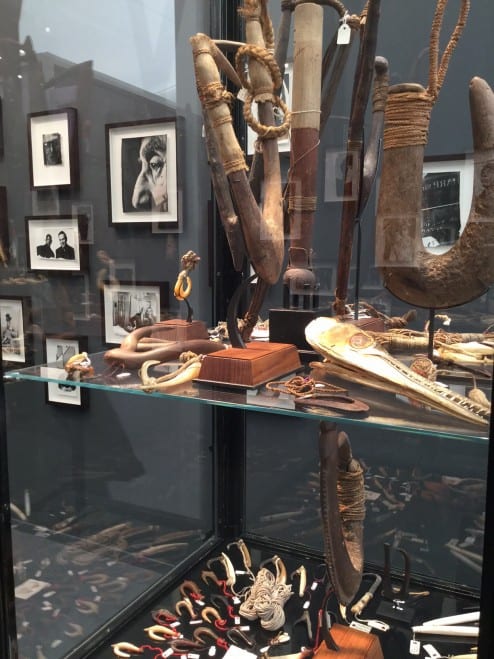
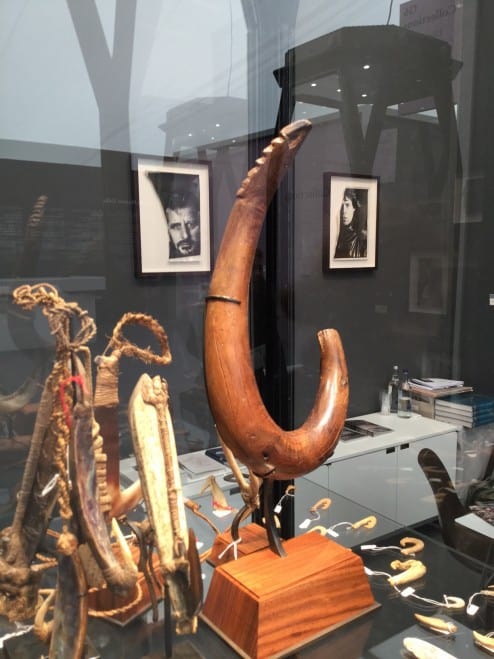
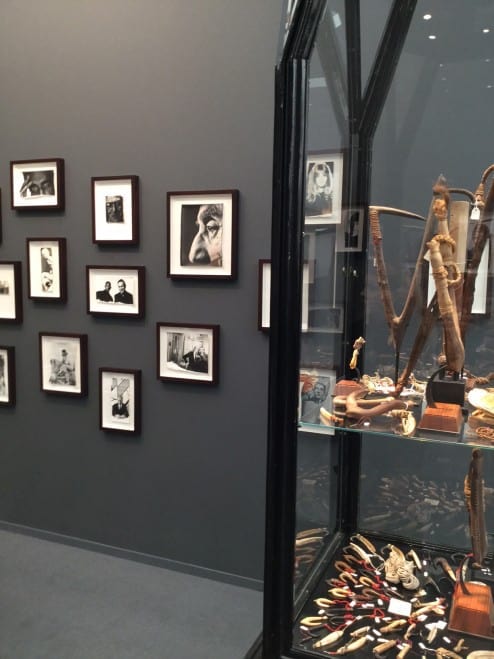
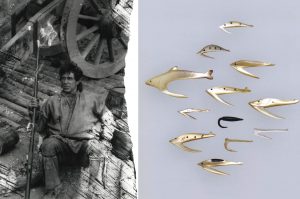
Daniel Blau is pleased to show at the launch of the “Collections” section of Frieze Masters. Exhibited here for the first time together, Blau’s impressive collection of Pacific fish hooks can be admired alongside David Bailey’s stunning Uncharted photographs.
“A great catch” is, as we all know, a difficult feat. It is always supported by knowledge, skill and technology. In the Pacific though, it is about survival. The people of the Pacific Islands refined their fishing technique, making it an art form. Their craftsmanship evolved through many generations perfecting how, where and when to catch a particular fish at any given moment. The elegance of these hooks is astonishing: they can all be distinguished by fascinating, sometimes minute, variations in detail as every hook is designed for a specific type of fish. The hook itself is the mesmerisingly inviting bait which, by virtue of its sublime design and material, entices the fish to seize it. Distinctive in their production, the hooks are made using only local materials available to the isolated island societies. Most of the hooks presented here were made without any use of metal since metals had only been introduced to the islands after the first European explorers’ arrival in the last quarter of the 18th century. Unfortunately this ancient knowledge, craftsmanship and skill has become increasingly rare since the introduction of metal fish hooks. As the traditional ways of life on the islands give way to a globalised, 21st century standard of living – these hooks remain impressive and important examples of the distant Pacific Island Cultures.
Bailey’s collection of fragmented Uncharted prints, characterised by their torn edges, gives us insight into his artistic ingenuity and distinctive ability to create unique photographs, despite photography’s inherent reproducibility. Famous for his iconic portraits and inventive fashion photography, this collection of Uncharted prints shows another facet of Bailey’s œuvre. Torn before printing, the rough borders of these prints accentuate specific details whilst omitting others.Bailey makes his compositional choices in the brief magical moment of darkness between focus and exposure, releasing the unpredictable laws of chance in the creation of these fragments of his genius.
Put simply, a great collection represents the wonders of each individual object it houses.
Frieze Masters Stand G6
Regent’s Park NW1 4HA, London UK
Collectors’ Preview Tues. October 13th (invitation only)
Exhibition
Wed. 14th – Sun. 18th October 2015
October 14, 2015 — October 18, 2015
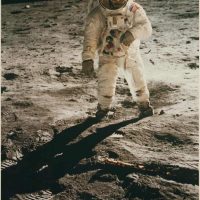
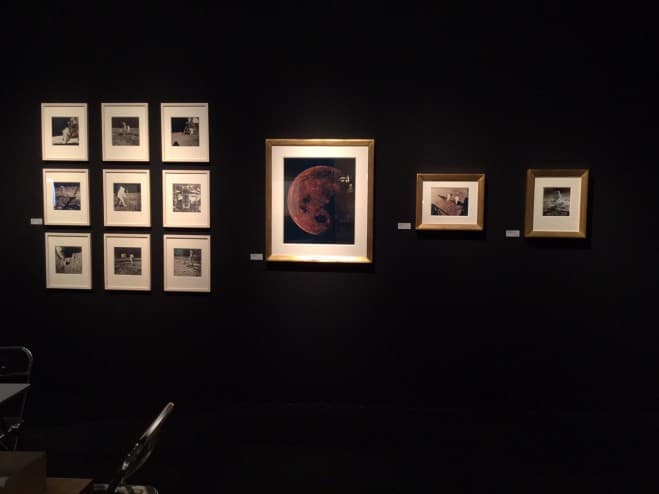
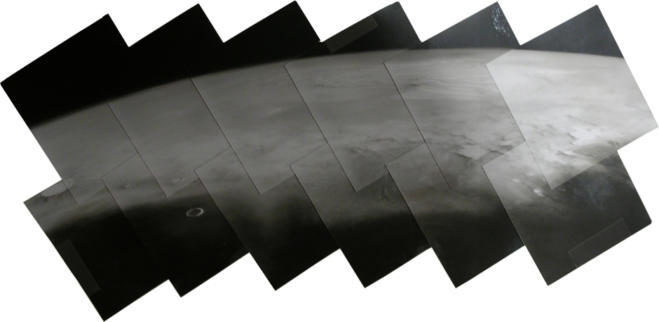
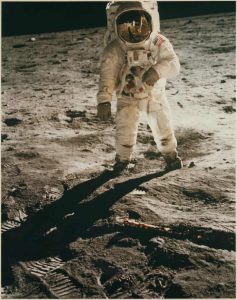
Why NASA photos?
Many of us remember the moment of the Apollo XI landing and the first man stepping onto the Moon’s elusive, dusty ground. It was a glorious moment which, momentarily, seemed to eclipse all our fears and problems. It truly felt like a moment of universal enthusiasm.
Though primarily scientific, NASA’s space program produced some of the most visually enchanting,mystical and intriguing pictures of the 20th century. As the most expensive photographs ever taken, due to the staggering financial costs demanded by the United States space program, these prints stand as visual evidence for some of mankind’s greatest achievements. These pictures are rare, and often unique witnesses to these extraordinary moments capturing the various layers of political, documentary and artistic values in their glorious nostalgia.
Why Grosz drawings?
I know Grosz as the sharpest pen – more often than not nailing the Weimarer German to paper and dissecting the entrails of his soul.
Early in his career, he cut his pens and quills on nudes – edging along their outlines and scratching at their private parts.When I first discovered (probably well-known to the rest of the world) his 1920s drawings of nudes, couples, threesomes and groups, it was truly exciting.
The forcefully pornographic subject matter adds an additional dimension to these brazen drawings. Lines I find in de Kooning, J. Jones or Rauschenberg, but only decades later, are here already, defiling the paper.
Grosz, so gross and yet so magnificent!
PAD London 2015 Stand A15
Berkeley Square London, W1
VIP Preview
Tues. Oct.13 (by invitation only) 3 – 8 pm
Public Opening hours: Wed.14 Oct – Sun. 18 Oct. 2015
from 11 – 8 pm
 +49 89 29 73 42