



Author: dblauadmin

Published by Daniel Blau, 2011.
Edited by Daniel Blau and Klaus Maaz.
Texts by K. Maaz, S. Picasso and A.J P. Meyer.
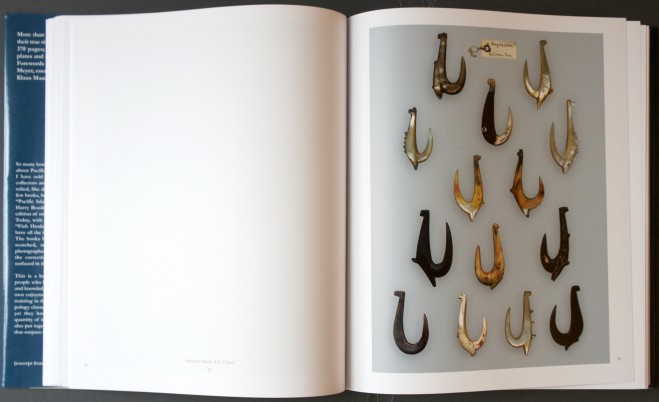
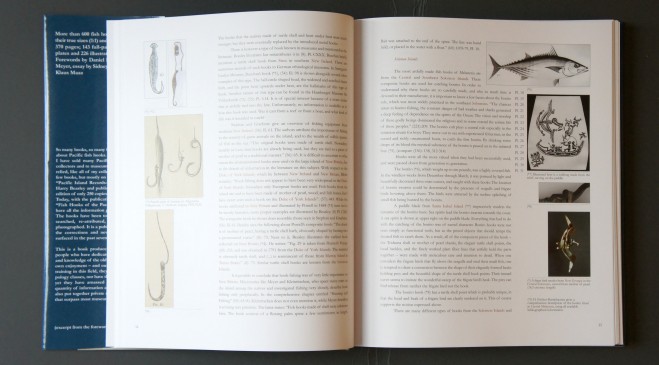
The fish hook derives its form from its practical intention – to catch a fish. But in cultures where fishing is and always has been a main livelihood, the crafting of fish hooks becomes an Art. This volume features more than 600 fish hooks used by the peoples of the Pacific Islands, with life-size illustrations and accompanying texts. This is the product of a collaboration of private collectors and is the first extensive monograph on the subject since the 1928 volume Pacific Island Record: Fishhooks by Harry Beasley.
Purchase your copy here



From Silverpoint to Silver Screen
Early Drawings of Andy Warhol 1949-1959
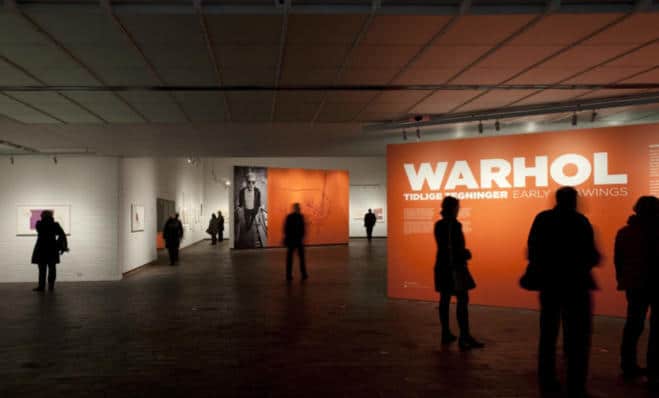
Campbell´s soup cans, the banana album cover from The Velvet Underground and quirky colour-adjusted panels of film stars and artists – Marilyn Monroe, Elizabeth Taylor, Michael Jackson – are all immediately recognisable as Andy Warhol´s work. But he was also a skilled draftsman, filling early sketchbooks with freehand drawings of still lifes and portraits of friends.
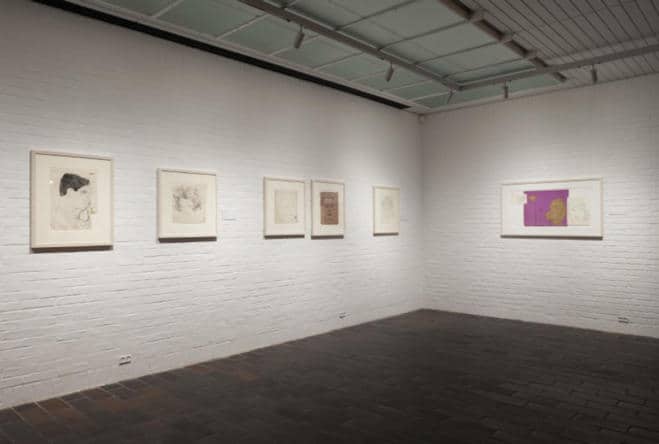
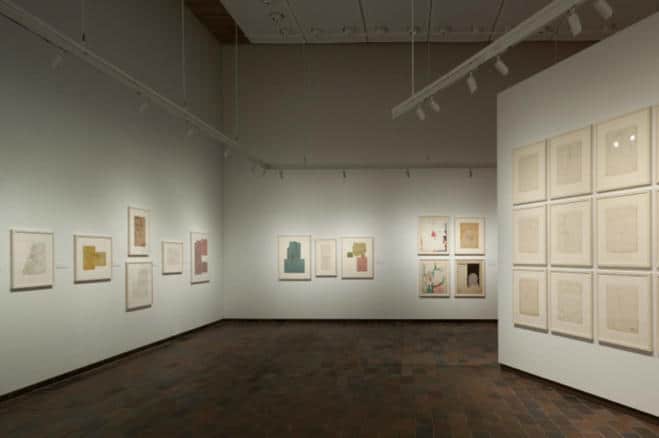
From Silverpoint to Silver Screen brings together more than 100 of Warhol´s early drawings, from the 1950s. They show great great technical ability and are executed in Warhol´s characteristic blotted-line-technique, which involved tracing projected photographic images onto paper and blotting the inked figures to creative variations on a theme. Many drawings were completed during Warhol´s early years in New York and include award-winning commercial illustriations and assignments from his studies at the Carnegie Institute of Technology. Other images demonstrate his take on the dark side of society. The book includes insightful essays on the young Andy Warhol and the art scene of the 1950s. This groundbreaking publication reveals a lesser-known side of Warhol and gives insight into a time of uncertainty and excitement in his development.
Essays by J. Hofmaier and S. Picasso
Text: English/German
248 pages, 120 colour illustrations
24 x 28, hardcover
€ 50 plus shipping
ISBN: 978-3-7774-5341-5
Purchase your copy here
Please contact the gallery for further details.
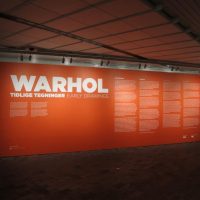
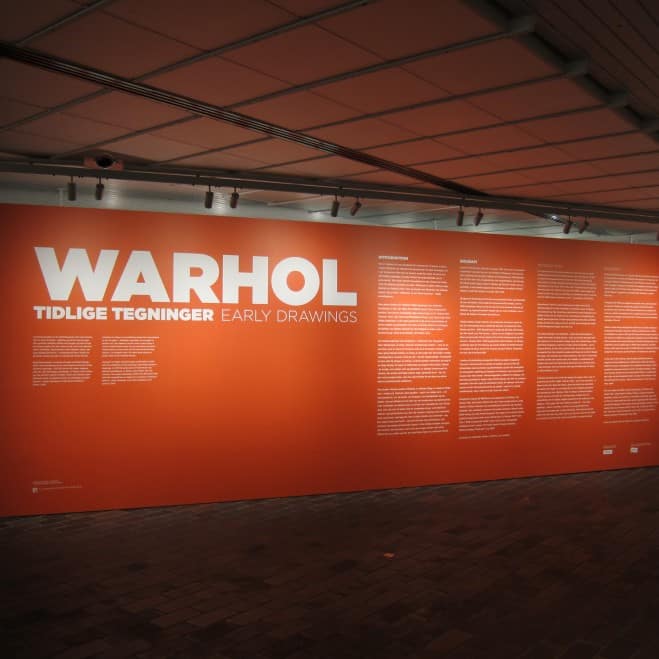
January 8, 2013 — March 3, 2013
The first international museum exhibition of Andy Warhol’s ink drawings from the 1950s is on show at Denmark’s Louisiana Museum of Modern Art. “From Silverpoint to Silver Screen” is a collection of early drawings recently discovered by Daniel Blau. More than 150 of these works will be on public view for the first time in this unmissable exhibition from January 8th – February 21st, 2013.
Hardcover, 280 pages, over 200 illustrations in colour and texts by internationally acclaimed experts: our new publication of Andy Warhol’s drawings from the 1950s is finally available for purchase! The first copies of this outstanding hardcover book will arrive at the gallery next week.
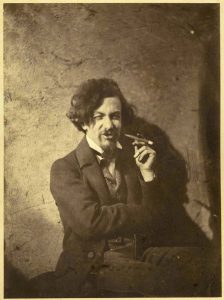
Le Gray is well known for his technical innovations and distinctive photographs as well as for his teaching of other notable photographers. His architectural, landscape and portrait photographs were influential and he was an important contributor to the development of the wax paper negative. In the 1850s the photographer started using collodion-on-glass negatives in preference to paper negatives in order to achieve increased sharpness of the image
and faster exposure times.
His students included Charles Nègre, Henri Le Secq, Nadar, Olympe Aguado, and Maxime Du Camp. In 1851, he became one of the first five photographers hired for the Missions Héliographiques to document French monuments and buildings. Despite his success, he became bankrupt in 1860. He left his life in France for travels in Italy, before settling in Egypt where he continued to take photographs.
Selected exhibitions:
2003
“Sea and Sky: Photographs by Gustave Le Gray 1856-1857”, Victoria and Albert Museum, London, UK
2002
“Gustave Le Gray, Photographer”, Getty Center, Los Angeles, USA
1999
“Museum as Muse: Artists Reflect”, Museum of Modern Art, New York, USA
1998
“Beyond the Edges: An Insider’s Look at Early Photographs”, The Metropolitan Museum of Art, New York, USA
1987
“The Photography of Gustave Le Gray”, Art Institute of Chicago, Chicago, USA
January 11, 2013 — February 16, 2013
“Night and day, he prowled the streets and tall buildings of Manhattan…”
Wanda Rickerby
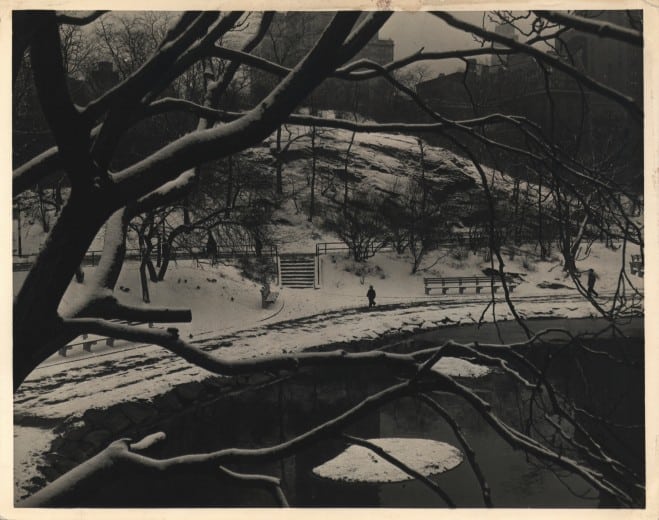
Daniel Blau is delighted to present an exhibition of vintage prints by renowned American photographer Arthur B. Rickerby (1921 – 1972). Best known for his depictions of New York life and organised sport, Rickerby also covered World War II events in the Pacific under Edward Steichen.
A native New Yorker, he photographed the city all his life – as a United Press employee, a freelancer, and later as one of the prestigious LIFE magazine staff photographers. The variety of subjects he covered is remarkable, from street scenes to union strikes, to President Kennedy and happenings abroad.
This is the first time that these rare vintage prints will be shown in a solo exhibition in Europe, representing the discovery of a historically important photographer who bore witness to many of the great events of the Twentieth Century.
Arthur Burroughs Rickerby was born in New York City in 1921. He began his photographic career while a student at Duke University (Durham, North Carolina), where he documented the campus sports to sell his images to local newspapers. Acme Newspictures (now UPI) noticed him and offered him a job in New York after his graduation. As this coincided with the Second World War, however, he was sent to the Pacific to cover the events under Edward Steichen.
Upon the end of the war, he returned to his job as a photojournalist in New York, recording every aspect of the city and always testing new photographic equipment, such as 35 mm film. He was nominated for a Pulitzer prize for his leadership in the world of news photography. He left United Press to become a freelancer, and as he became better known, was hired by the prestigious LIFE Magazine, with which he shot exclusive stories about president Kennedy. He continued photographing a wide variety of subjects throughout his life.
A retrospective of Rickerby’s work, entitled “The Photography of Arthur B. Rickerby, The UPI and LIFE years, 1941-1971”, toured the USA in the 1990s.
November 9, 2012 — December 22, 2012
After last year’s successful exhibition of affordable photography, the gallery is pleased to present a show of vintage photographs in time for Christmas.
Photography is about collecting. Sometimes the gallery may seem like a museum space, but nevertheless the works on the wall are for sale. This gives visitors the opportunity to participate in the great adventure that is collecting photography. Now more than ever before we have the possibility of finding great works of art at affordable prices. We should remember that the last time such an opportunity arose was in the 1960s, and subsequently the market for 19th Century photography flourished. This time it is the shift to digital photography that brings 20th Century prints to light out of various archives.
It takes foresight to recognise a great work of art as a piece of history when the price tag is only a few hundred pounds. But here in East London the gallery encourages people of every generation to have a look at these one-of-a-kind pieces and develop or begin their own collections.
November 15, 2012 — November 18, 2012
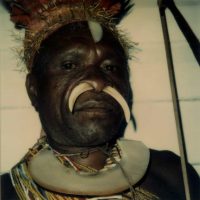
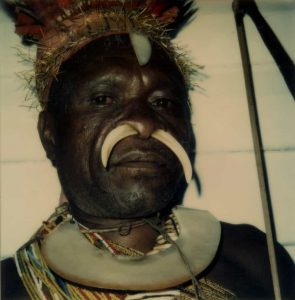
In addition to a collection of aerial photographs from the great conflicts of the mid-twentieth century, we will show recent work by artist David Bailey. Having already been surprised by the discovery of a number of 1974 Polaroids taken by Bailey of Papua New Guinea and Planet of the Apes, it was uncanny to learn that for the past year and a half he has been photographing televised footage from the Second World War. Daniel only found out when he showed Bailey the invitation for the gallery’s Paris Photo exhibition, “Airborne”. Thus for the first time we will present to the public Bailey’s most recent photographic adventure in the form of large scale photographs shot with a digital camera.
When Bailey takes photos of what he sees on film he increases the number of transitions between event and image to a level of abstraction that no longer has much to do with what actually took place. The image is morphed into something else, losing its historic context and becoming entirely Bailey’s.
November 15, 2012 — November 18, 2012
“Photography not only helps us to see, but it inverses our preconceptions about sight.”
Sydney Picasso
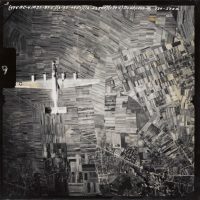
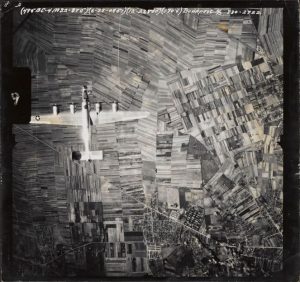
For Paris Photo 2012, Daniel Blau Ltd. presents “Airborne”, a collection of aerial photographs from the great conflicts of the mid-twentieth century. The exhibition focuses on the Pacific front of the Second World War, but also on other conflicts in which the use of airplanes determined and shaped the nature of warfare. A number of pictures taken on NASA missions from 1966-1971 provide a welcome juxtaposition to the raw violence of war.
The photographs in the “Airborne” exhibition have a dual nature: the documentary and the aesthetic. As Sydney Picasso explains, aerial photographs (of war) can be seen as historical documents but also as artistic planes where the world is flattened and transformed into an aesthetic experience. Our vision of the world has been altered by photography, and even more so by airborne photography, ever since Nadar started taking pictures from a hot air balloon in the 1850s.
This collection of photographs is unique in that it shows us various aspects and landscapes of war, from semi abstract landscapes, bombs falling into clouds, elegant patterns carved into the ocean’s surface by escaping ships, to “beautiful” atomic clouds rising into the sky and the pristine choreography of jets from above.


November 9, 2012 — December 1, 2012
“To see oursels as ithers see us!” Robert Burns, 1786
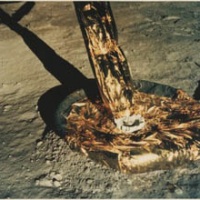
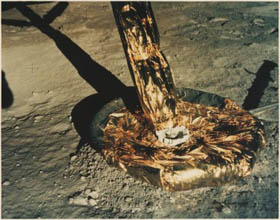
Daniel Blau Ltd. and Galerie Meyer are pleased to present ALLER-RETOUR, an exhibition of pictures from the Apollo X1 journey to the Moon. These works are arguably the ultimate reflection on the theme “The Journey”, the subject of Photo Saint-Germain-des-Prés 2012. This journey’s departure, destination and return extend beyond space and time into the realm of the unknown.
Space exploration has once again captivated the public with the recent landing of Mars rover “Curiosity”, which has produced unparalleled views of the “Red Planet”. Moreover, the recent passing of Neil Armstrong on August 25, 2012 is a poignant reminder of the monumentality and timeless intrigue of space in relation to mankind. Armstrong, reflecting on his journey to the Moon revealed: “the unknowns were rampant”. Set within the backdrop of the Cold War, with intense political tension between the United States and the USSR, the lunar module dubbed “The Eagle” landed Armstrong and Aldrin – with only thirty seconds of fuel remaining – on the Moon in July of 1969. An estimated 550 million people witnessed this undeniably historic event, as Armstrong and Buzz Aldrin explored the Moon’s surface for the very first time. Photographed over two hours while documenting and sampling the Moon, these original photographs remain the most expensive pictures ever taken in terms of their cost of production.
The “magnificent desolation”, as Aldrin described the surface of the Moon, had been photographed via telescope by Lewis Morris Rutherford in the 19th century. However, these 1969 photographs of an unprecedented clarity, the result of unfiltered sunlight in situ, epitomize the magnificence of space. The glorious nostalgia of this fortunate era is reflected in these incredible photographs.
50 years after the first man orbited Earth, the splendour and sublime quality of these groundbreaking pictures of the Moon continue to evoke wonder.
October 29, 2012 – November 23, 2012
A photo is part of reality, or at least a tiny part of it. This reality is always in the past, where it has become elusive for us. The amazing thing about photographs is that they show us something in which we place our faith – we trust the image.
When it comes to photos of war atrocities, death and destruction, the case is even more interesting, as there’s a moral in addition to an artistic aspect. Over the years I have amassed a collection of photos that contain both a particularly high degree of artistic value and a moral message. They were also all printed at the time of being taken, and are thus vintage and display zeitgeist.
For me it is interesting to interpret the past on the basis of the photographs in this exhibition; to align what I see with my own experience or what I’ve previously learned. I get to see something to which I otherwise would not have access. For example, I can still enter the ruined Reichstag in Berlin. These visual experiences imprint themselves immediately and strongly on the viewer. Slowly the artistic quality of these recordings becomes known.
Just to give an example: it must be a great artist who so immortalised the landing of Allied forces as Capa did in his eleven photos. At first glance and without the context they look inconspicuous. However, as we know that they were taken on the 6th of June, 1944 in Normandy they are considered poignant pictures, an intrinsic part of our memory.
Opening/Eröffnung: 26 October, 2012 6-9pm, 27 / 28, 11–6pm
Exhibition/Ausstellung: 29 October – 23 November
 +49 89 29 73 42