



Author: Christiane Wunsch
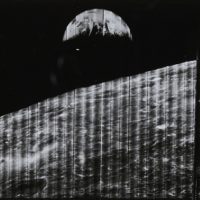
The 1960s have once again captured our imagination— and we have a lot in common with that decade, for we have found ourselves once more in the midst of a “youthquake,” global unrest, music festivals, and a technological boom. But this upcoming exhibition is an ode to one of the most exciting moments of the 60s: the US space program.
Recalling the photos of the moon NASA then released, we see in our mind’s eye grainy and streaked images of the cratered lunar surface. Those low quality visuals were, in fact, what NASA released to avoid revealing to the USSR the imaging potential of US spy satellites, as this space race was a defining aspect of the Cold War. The actual images, at full resolution and quality, certainly live up to their role as the crux of the program which eventually culminated in the moon landing.
So, while it may be trite to say such a thing in an age of endless digital reproduction, these photographs are something one simply must see in person. To think that these images were taken five decades ago gives an entirely new meaning to the power of the mechanical gaze. The Lunar orbiter and NASA team produced these images, but inherent in their nature is some sort of inexpressible mechanical arbitration.
They raise plenty of questions about photography and the status of the photo-image as a form of mechanical reproduction. These stunning shots were produced through intricate yet effective series of steps, as follows: the lunar orbiters used an imaging system consisting of a dual-lens camera, a film-processing unit, a readout scanner, and a film apparatus, which would work together to capture the images, print them out in incredibly high resolution, scan them, and transmit them back to Earth where they were captured at three different facilities, to account for the Earth rotating as the data was beamed down. Using this data, NASA generated photo-negatives and then contact printed, using strip-negatives, some of the most picturesque and sublime silver-gelatin prints ever made, including the first-ever photograph of Earth from the perspective of the moon.
Jason Jacques Gallery is located at 29 East 73rd Street, New York, NY.
Moon Rock will run July 16th to October 5th | An opening reception will be held July 16th, 6 – 8 pm.
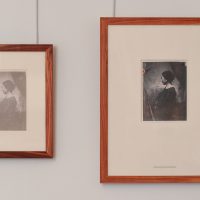
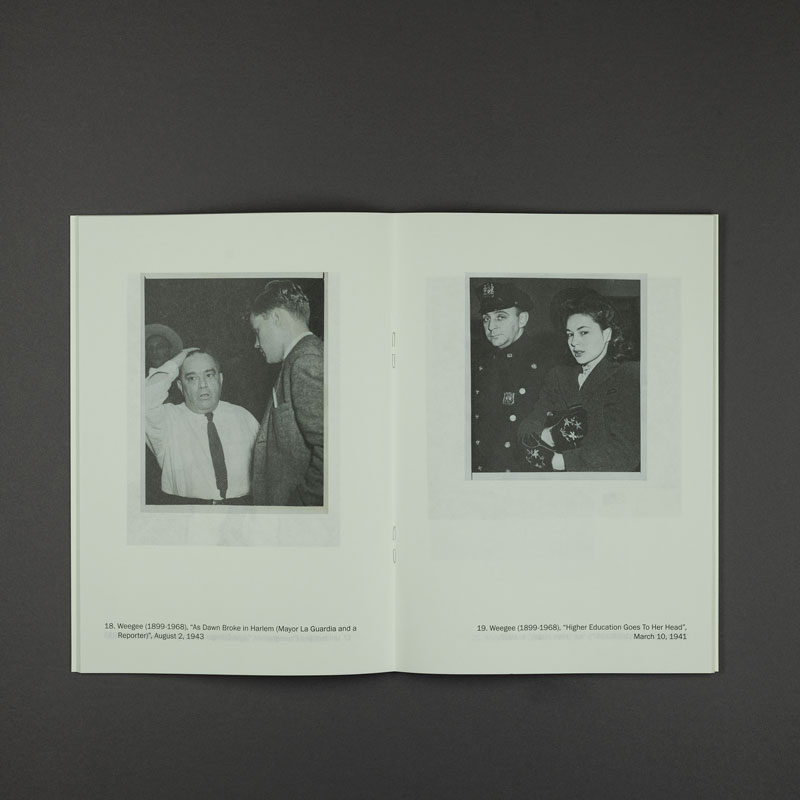
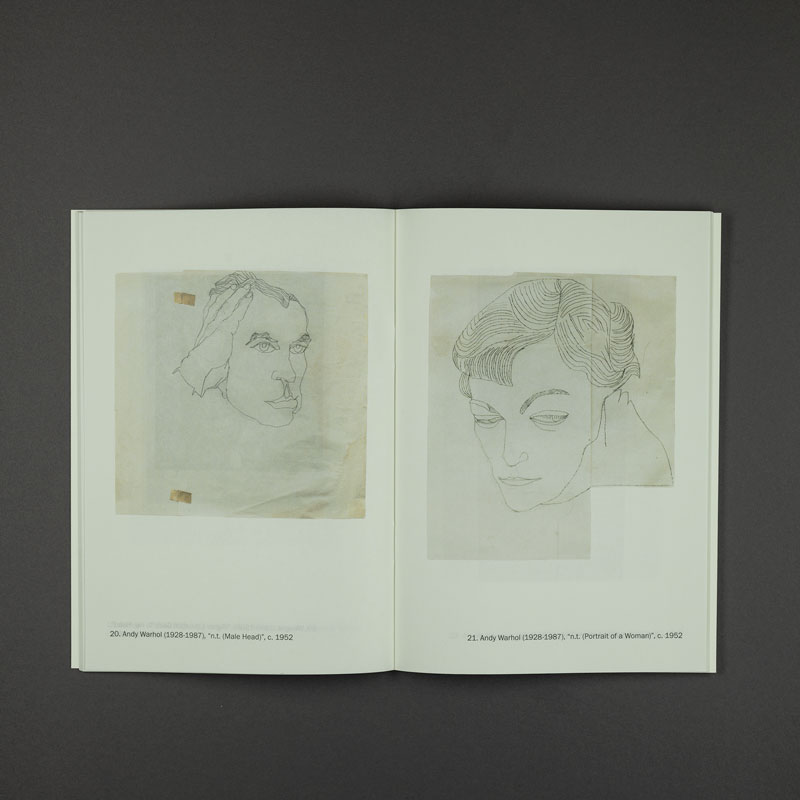
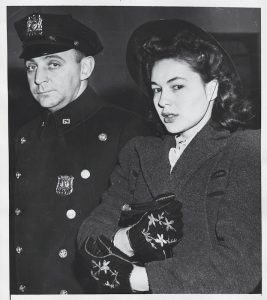
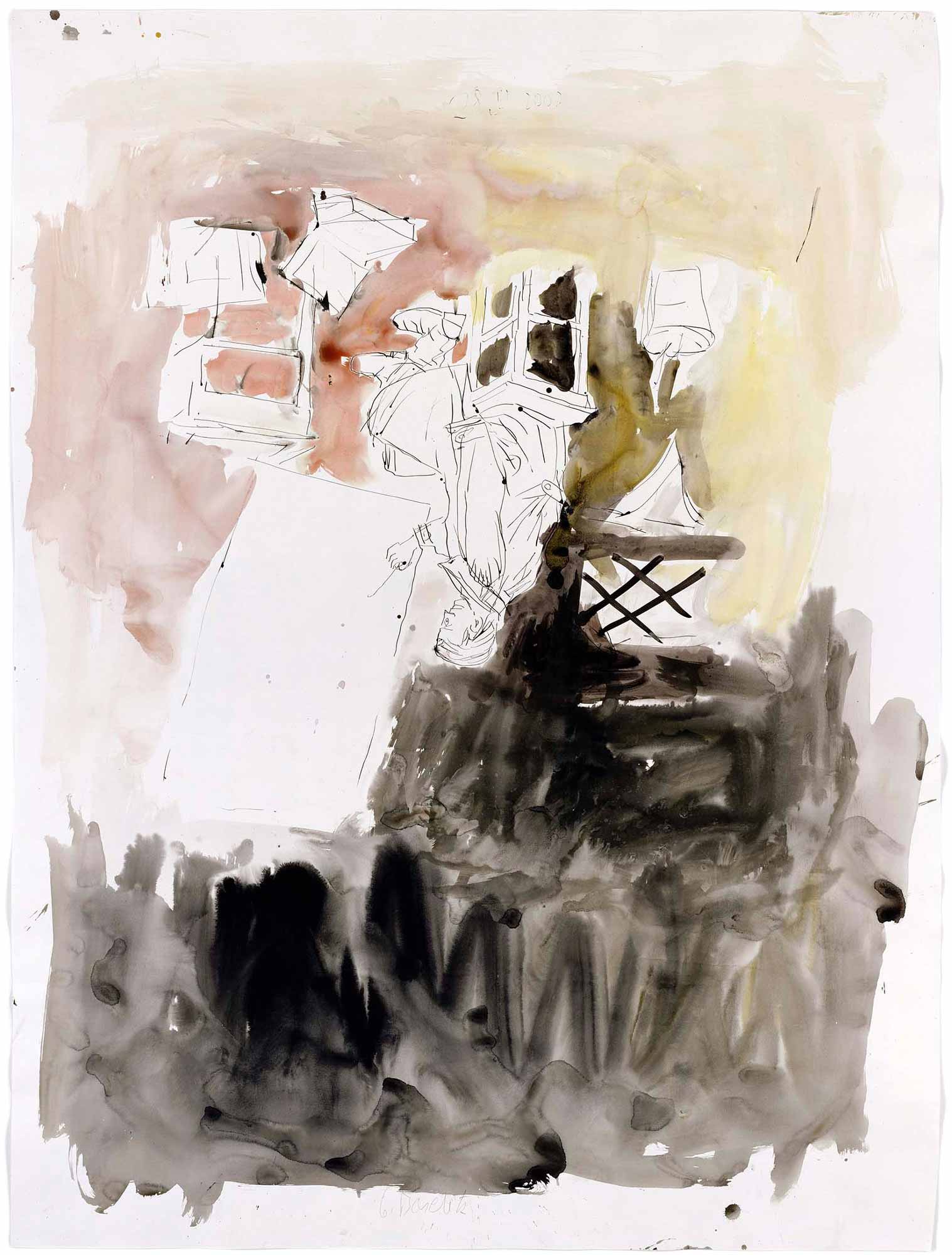
A Head
An exhibition with portraits in drawing, painting and photography
Find more information about this exhibition
Exhibition:
June 11 – July 31, 2019
11am – 6pm | mon – fri
Maximilianstraße 26, 80539 München
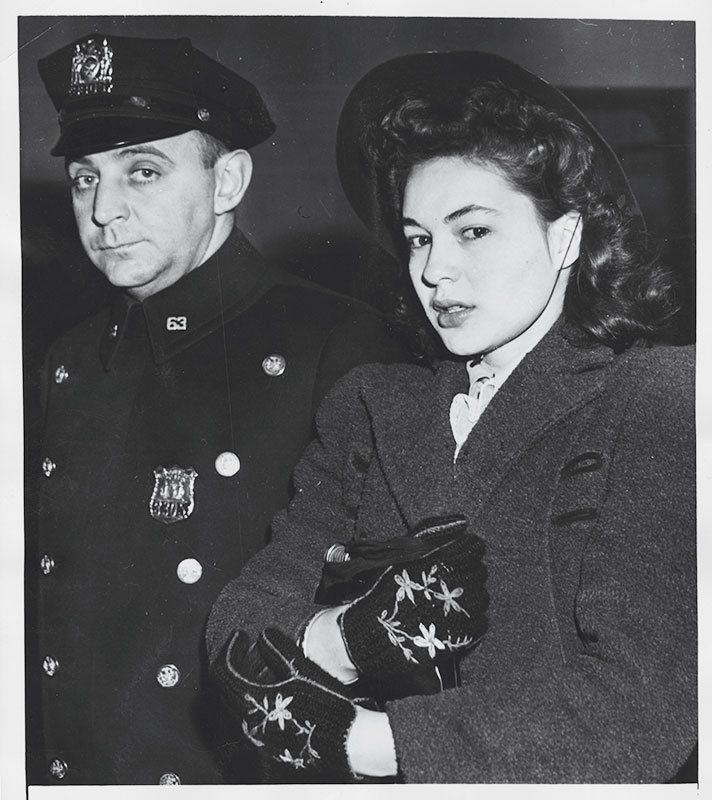
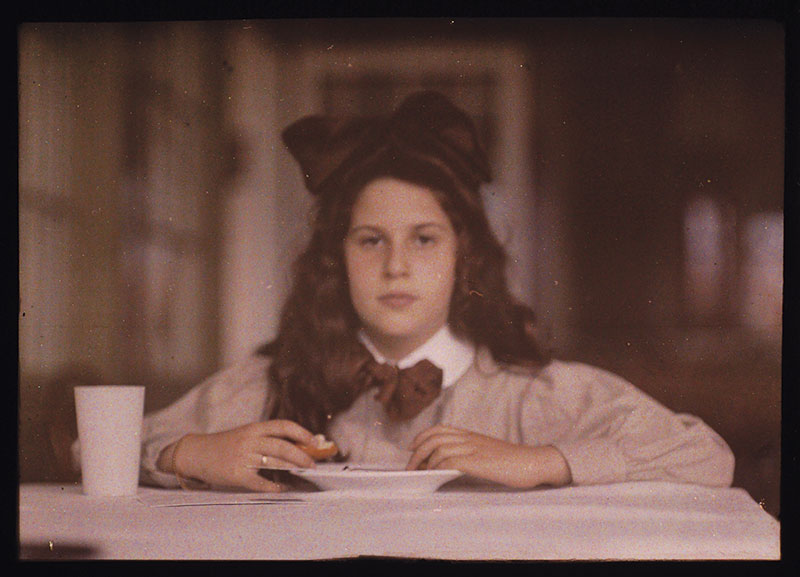
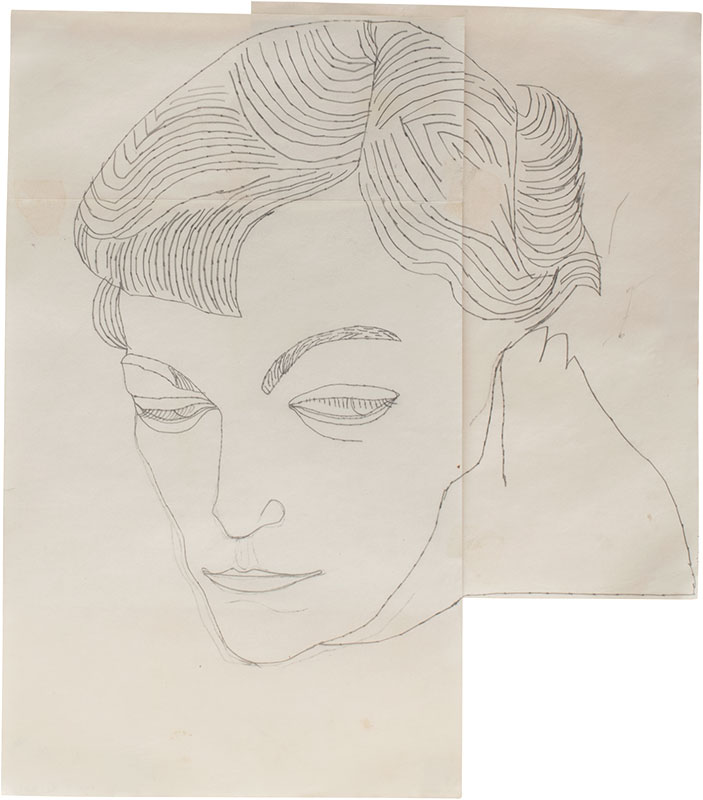
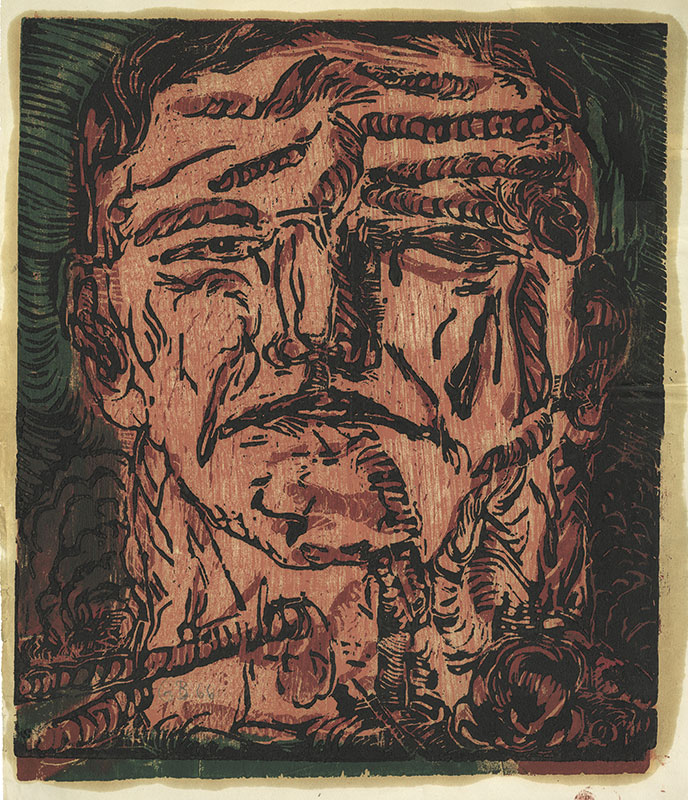
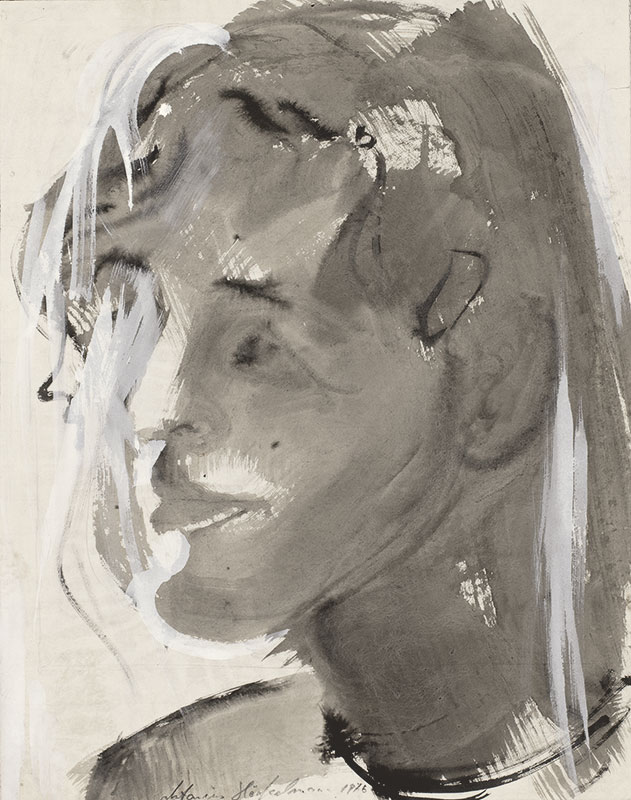
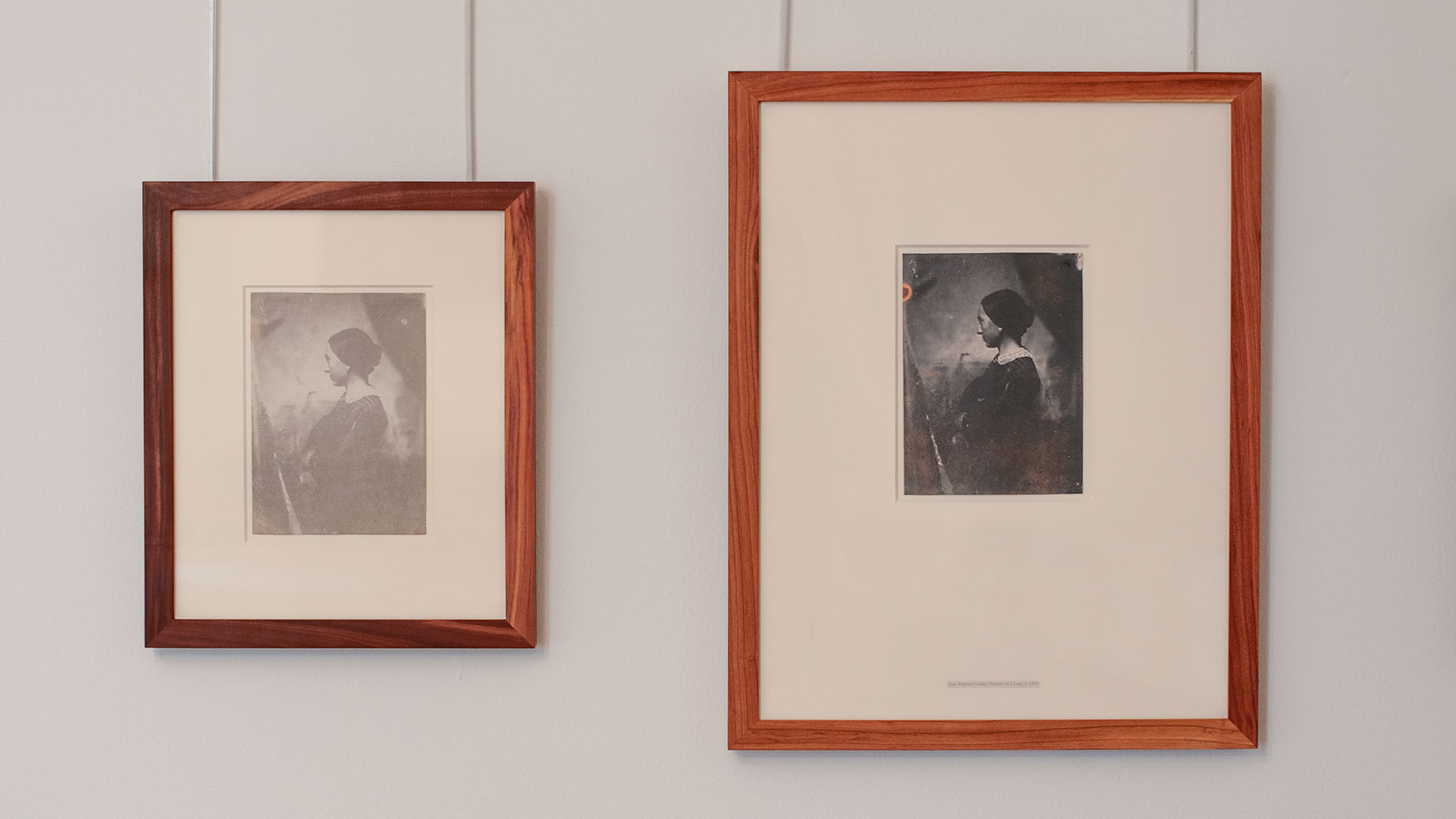
A Head
Portraits in drawing, painting and photography
Printed and bound by Pelo-Druck Lohner oHG
Paper content: Offset 60g/m2
Paper cover: Olin, Rough, cream, 200g/m2
40 pages, 35 images
15×21 cm, softcover
Editor: Daniel Blau

Mousse Magazin:
Georg Baselitz in Conversation with Kosme de Barañano
[Excerpt from the interview published in Baselitz – Academy (New York: Gagosian, 2019)]
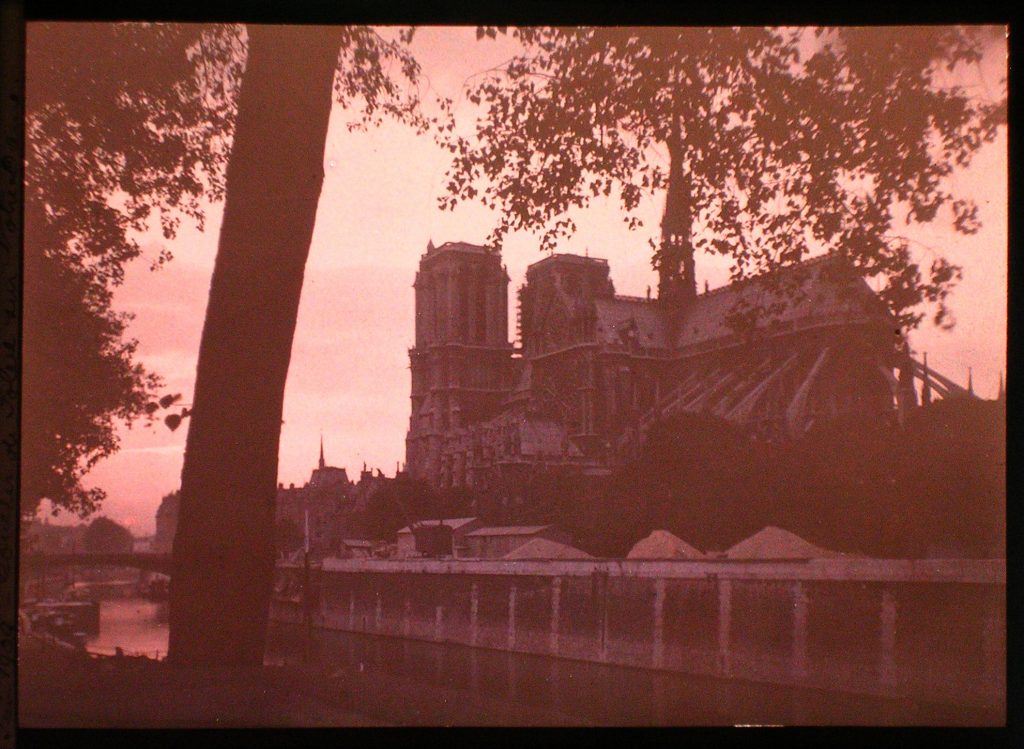
With great sorrow the world witnessed blaze in Paris on April 15, 2019.
To benefit the restauration of Notre Dame, we are preparing a project to take place during Paris Photo this November.
We will keep you informed of further details of this auction and how to contribute.
1950-2000
50 Years of Post-War Works on Paper
Vernissage (by invitation only)
Wednesday, June 12, 2019, 11am to 8pm
Public days
June 13-16, 2019, 11 am to 7pm
Booth F8
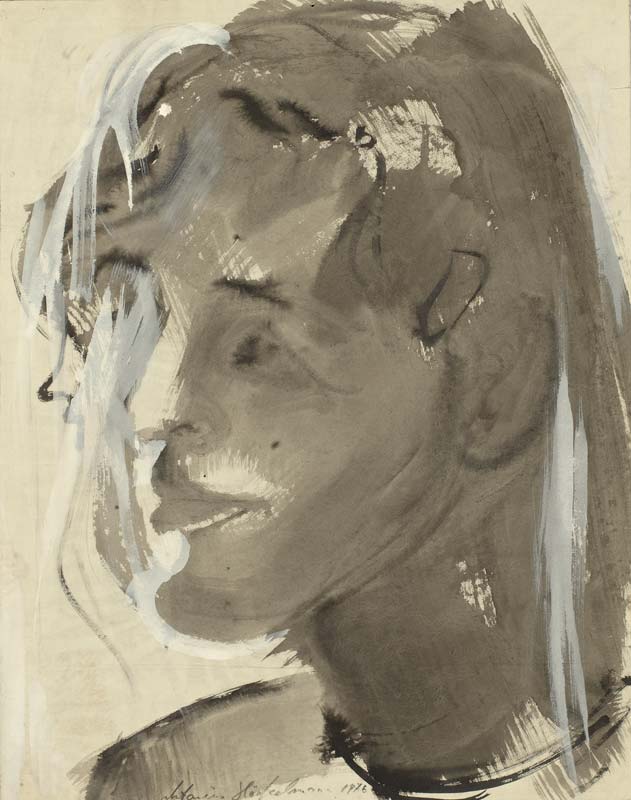
Daniel Blau is pleased to present a group exhibition of large-format works on paper by renowned international artists including Andy Warhol (1928-1987), Antonius Höckelmann (1937-2000), Georg Baselitz (*1938), Arnulf Rainer (*1929), Emilio Vedova (1919-2006) and ar. Penck (1939-2017).
In a series of bold 1980s works on paper by Penck the influences of the artist’s parallel practices as a sculptor and jazz drummer are palpable. These gestural works are characterised by rhythm and spatial awareness. These striking monochromes are complemented by a selection of earlier, color, almost abstract pieces from the 1970s – in black, red and blue gouache and wax crayon, perhaps coincidentally the colors of German electric cabling.
The human form and portraiture are the primary subjects of Andy Warhol’s line drawings from the 1950s, discovered in the artist’s estate. Warhol found inspiration in the pages of publications such as LIFE magazine, and many of his drawings reference photographs and graphic advertisements of the time. We are showing a selection of individual drawings of men, women and children.
Other exhibition highlights include works on paper by Arnulf Rainer and Emilio Vedova and ‘Orgie 1’ (1967-60) a large-scale charcoal and pencil work on paper by Antonius Höckelmann, who trained as a wood sculptor in the 1950s and whose mixed media works often combine sculpture and painting.
There is an appealing immediacy to these energetic and unpolished pieces, qualities that are also visible in in two towering oil paintings on canvas by American artist and musician Don Van Vliet – aka Captain Beefheart. His painting ‘Archaic Faces Frenzy’ (1986) depicts elongated figures set against a vivid background.
The post-WWI period is represented by a small group of nudes and erotic pencil drawings by George Grosz.
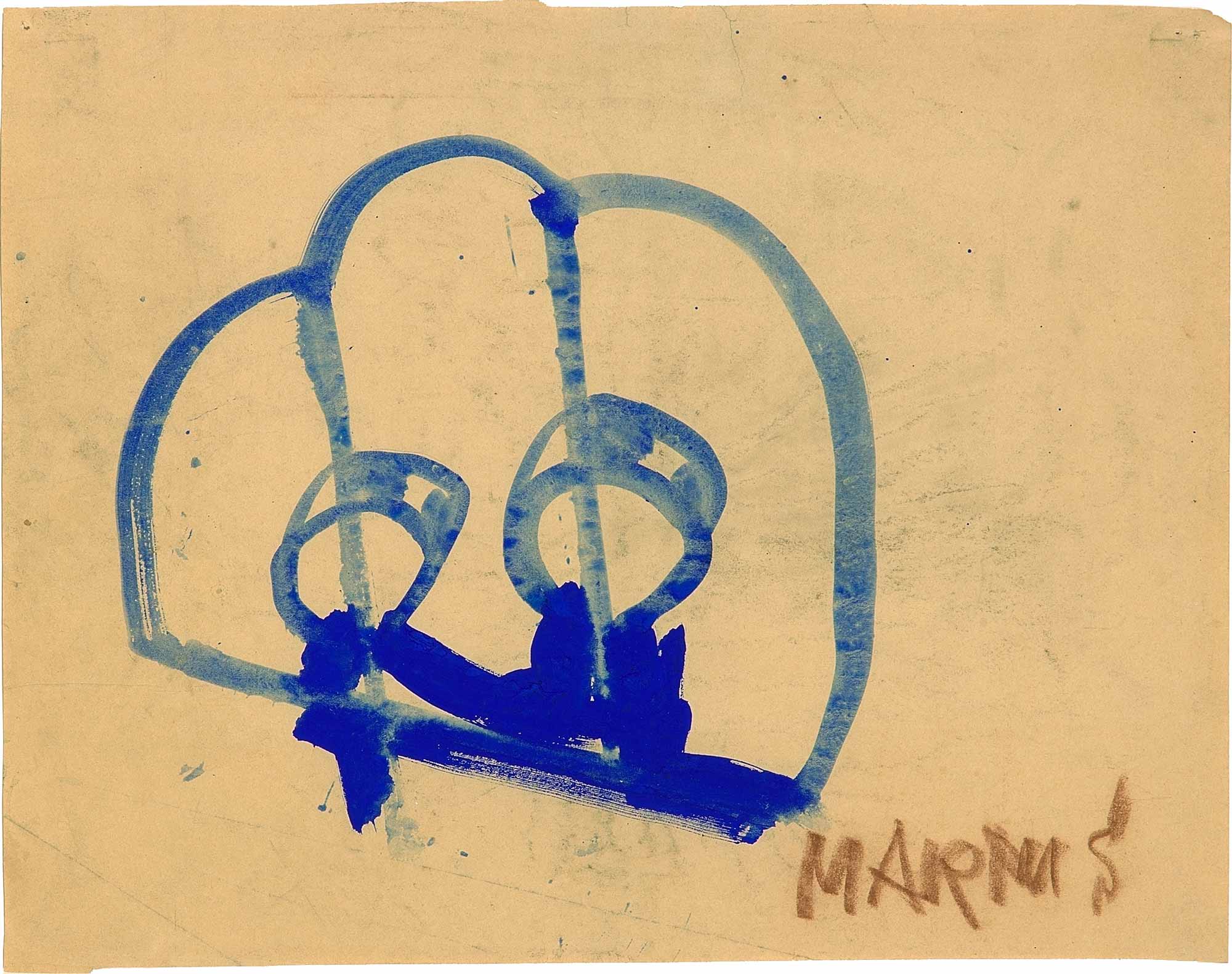
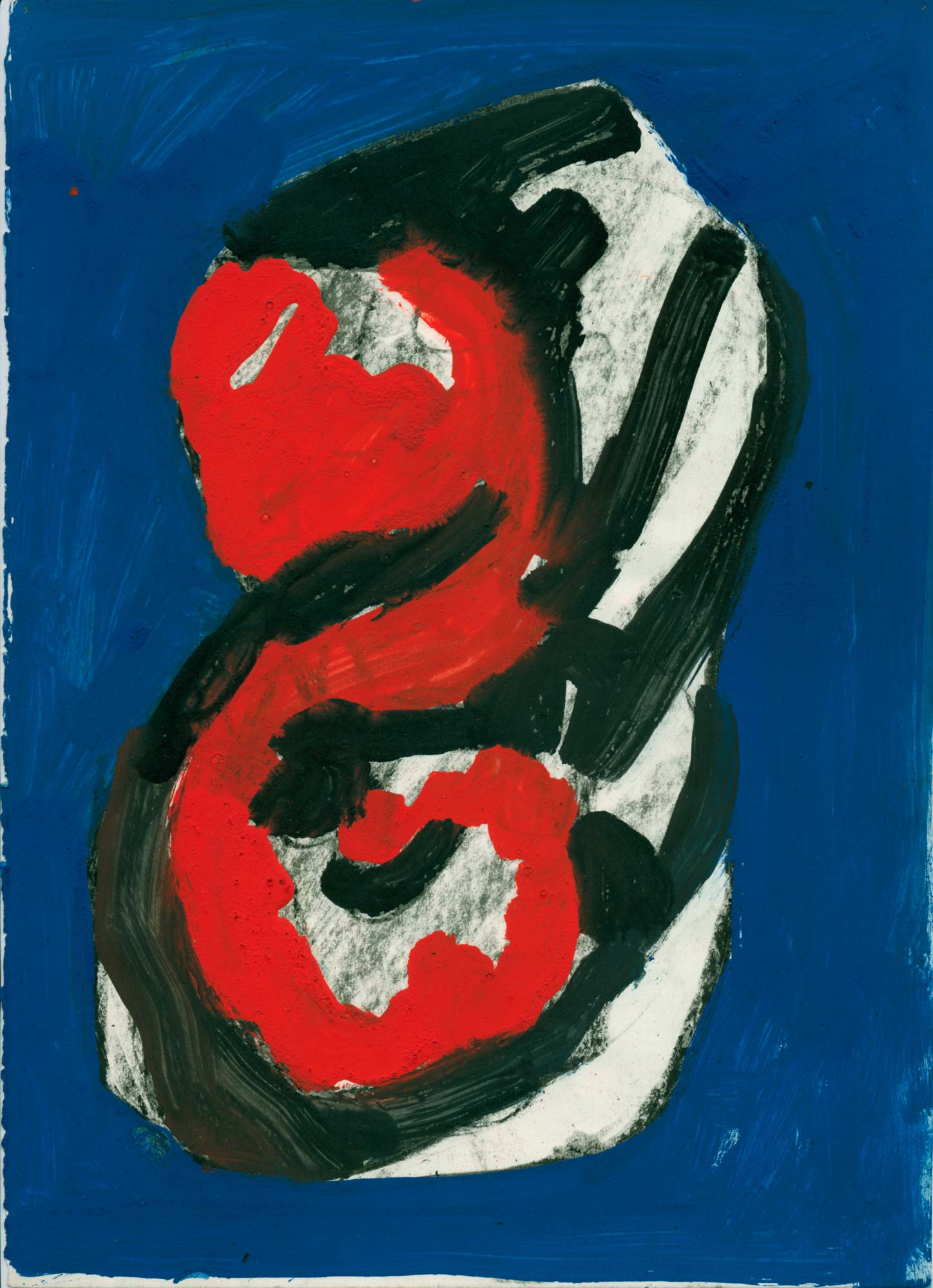
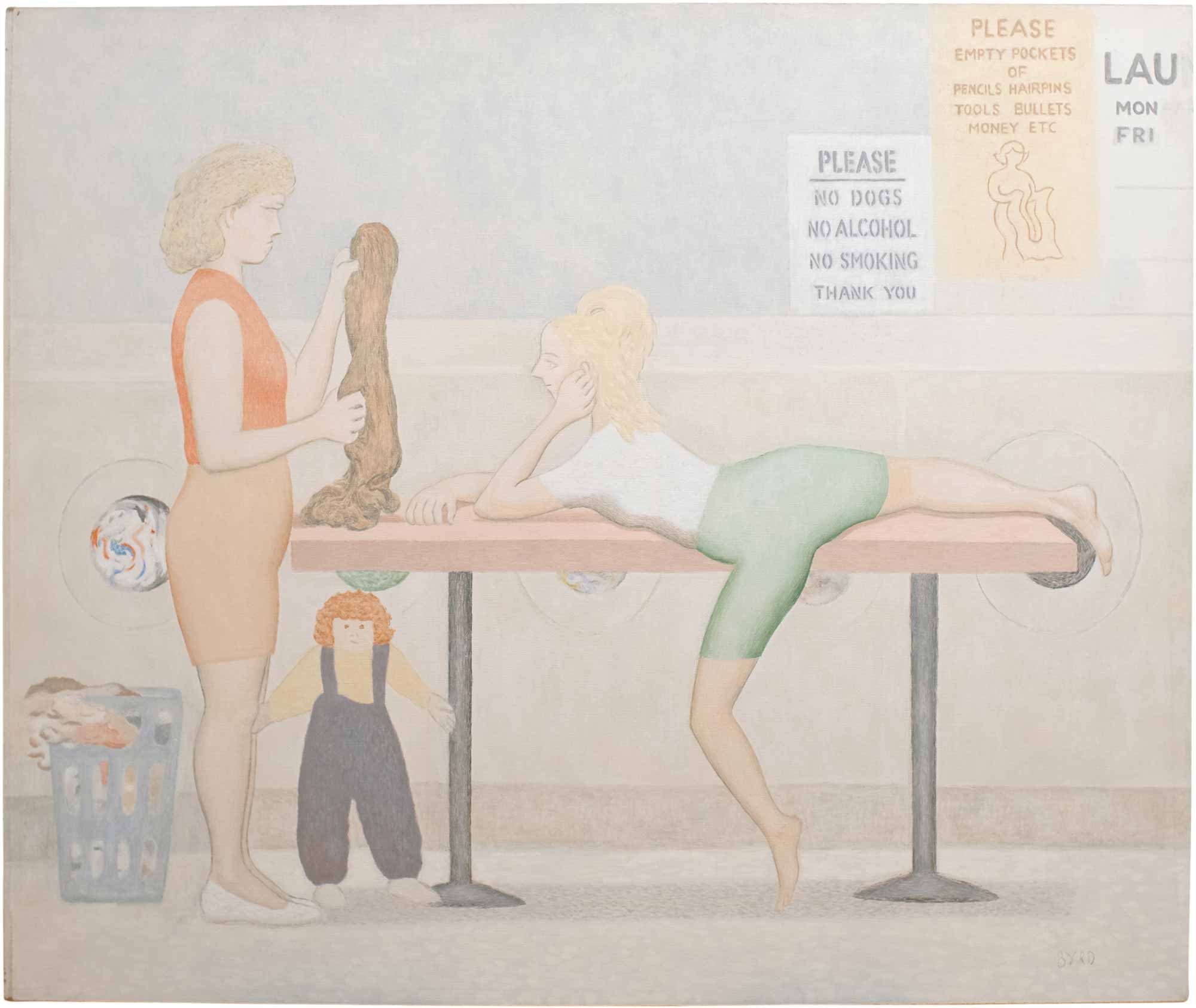
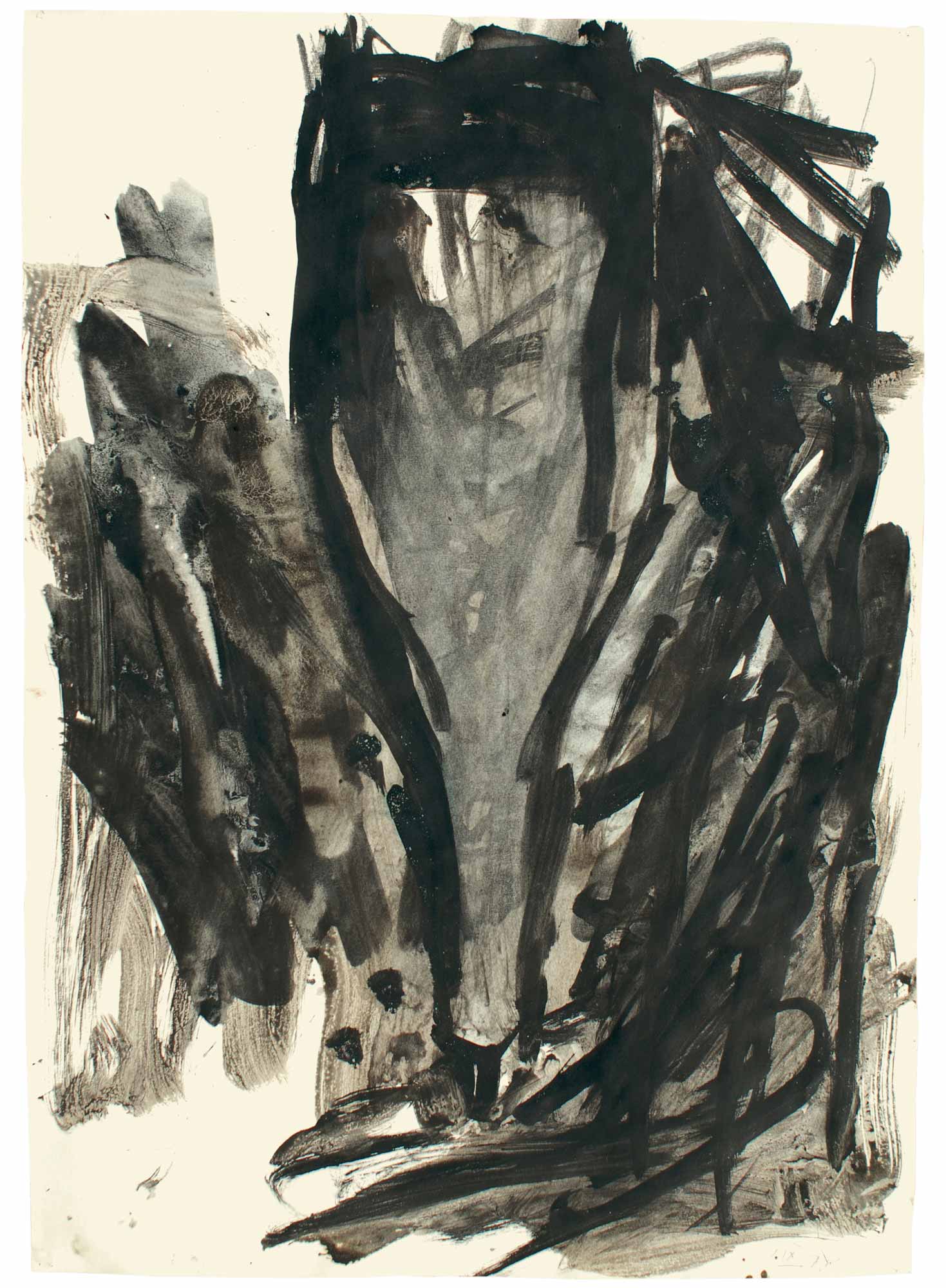
Upcoming Exhibition | Andy Warhol— From A to B and Back Again
May 19–September 2, 2019
Floor 4
Additional galleries on Floors 2 and 5
Andy Warhol at San Francisco Museum of Modern Art
Few American artists are as ever-present and instantly recognizable as Andy Warhol (1928–1987). Through his carefully cultivated persona and willingness to experiment with non-traditional art-making techniques, Warhol understood the growing power of images in contemporary life and helped to expand the role of the artist in society. This exhibition — the first Warhol retrospective organized in the U.S. since 1989 — reconsiders the work of one of the most inventive, influential, and important American artists. Beneath the glamour of Warhol’s wide-ranging creations is a deep engagement with the social issues of his time that continue to resonate today.
Stretching across three floors of SFMOMA, featuring a dozen works unique to this museum, and building on a wealth of new materials, research, and scholarship that has emerged since the artist’s untimely death in 1987, this exhibition reveals new complexities about the Warhol we think we know, and introduces a Warhol for the 21st century.
Andy Warhol—From A to B and Back Again is organized by the Whitney Museum of American Art, New York.
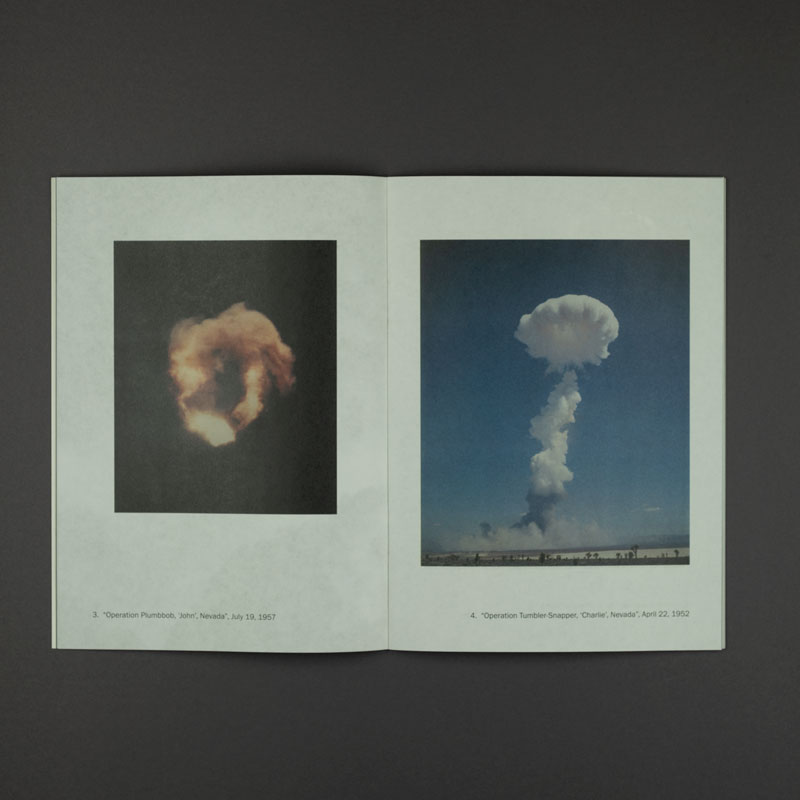
Atom
In this collection we present rare 1940s and 1950s pictures of
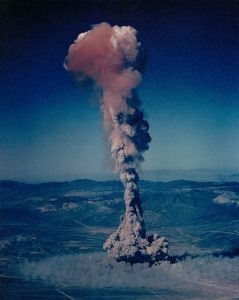
nuclear bomb blasts. They vary from luminous, blazing explosions and
plumes of billowing smoke to an uncannily serene pastel mushroom
cloud.
Find more information about this exhibition
Exhibition:
march 28 – may 6, 2019 (Exhibition extended until May 10th, 2019)
11am – 6pm | mon – fri
Maximilianstraße 26, 80539 München
See press coverage here (PDF 12,2 MB)
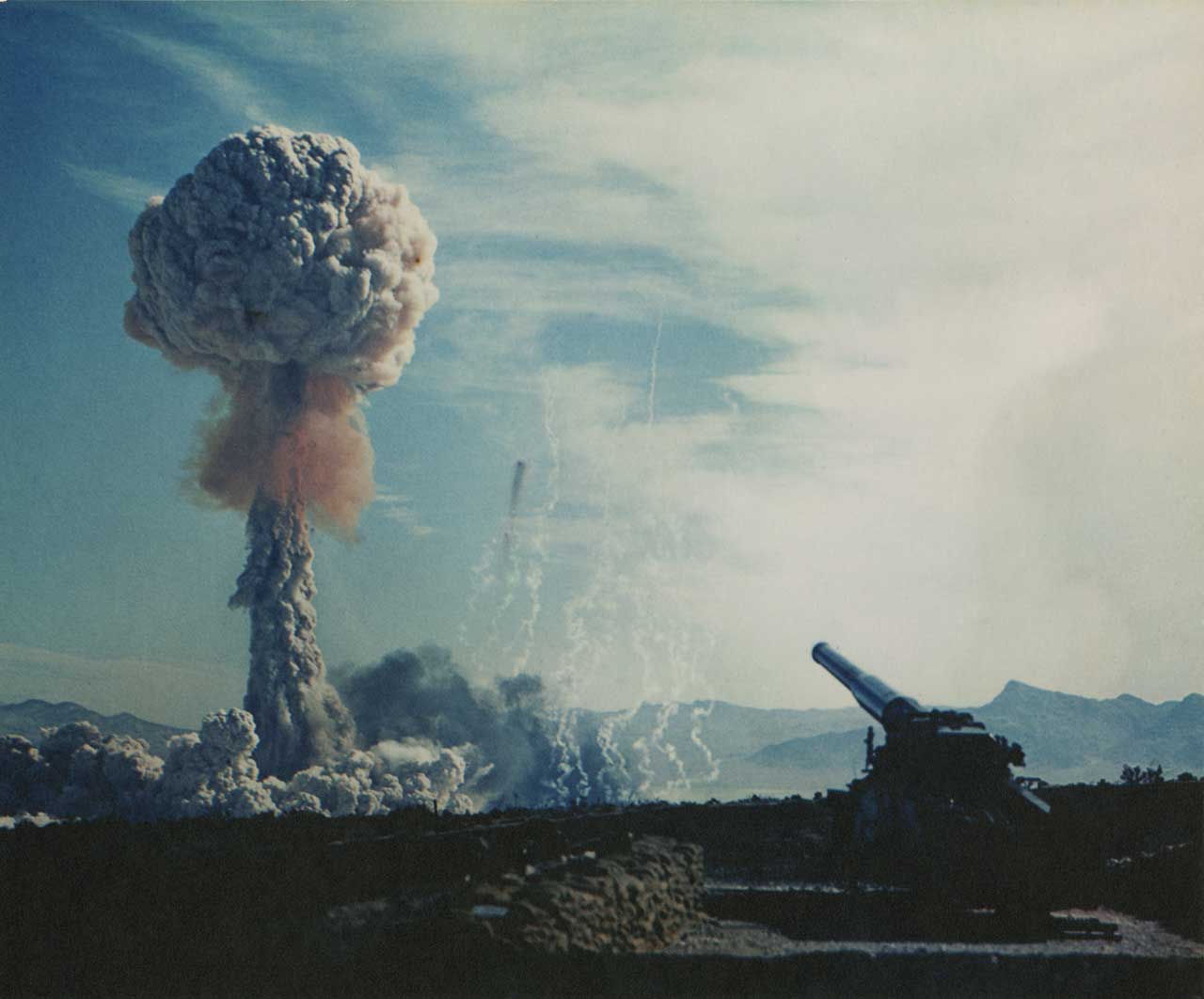

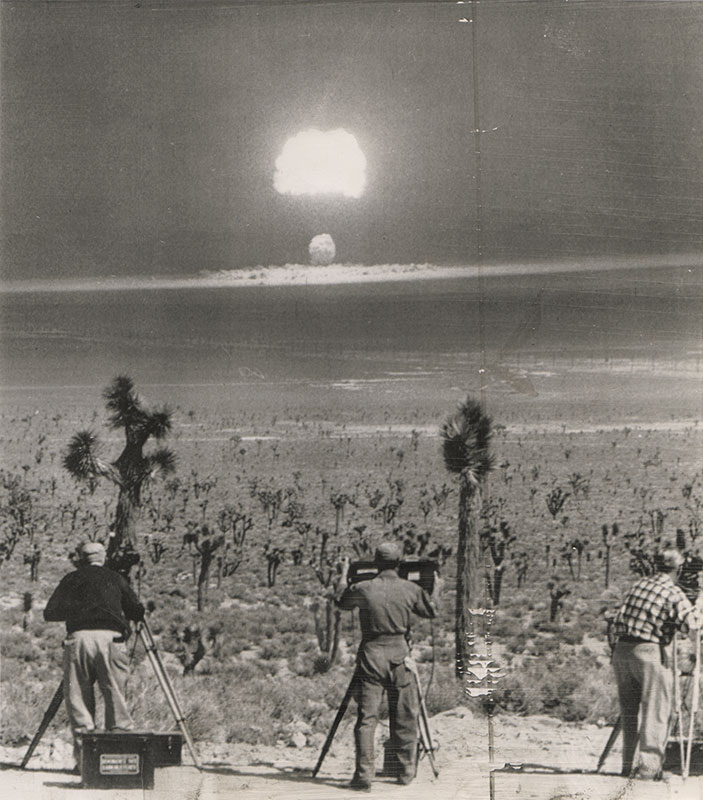
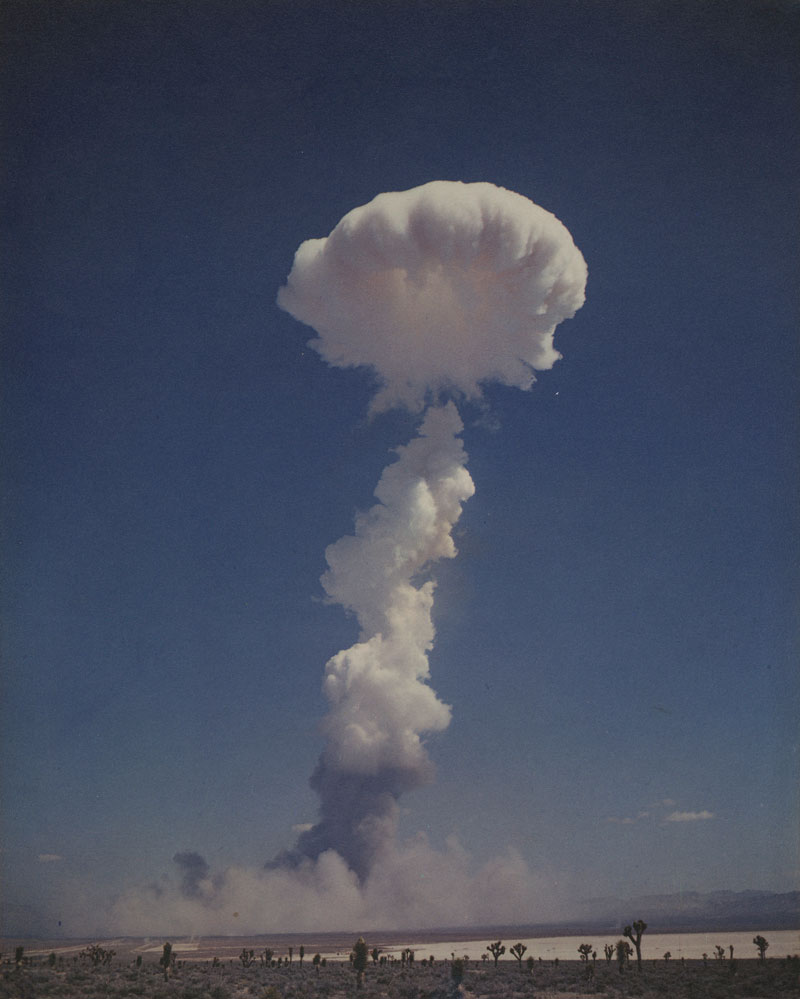
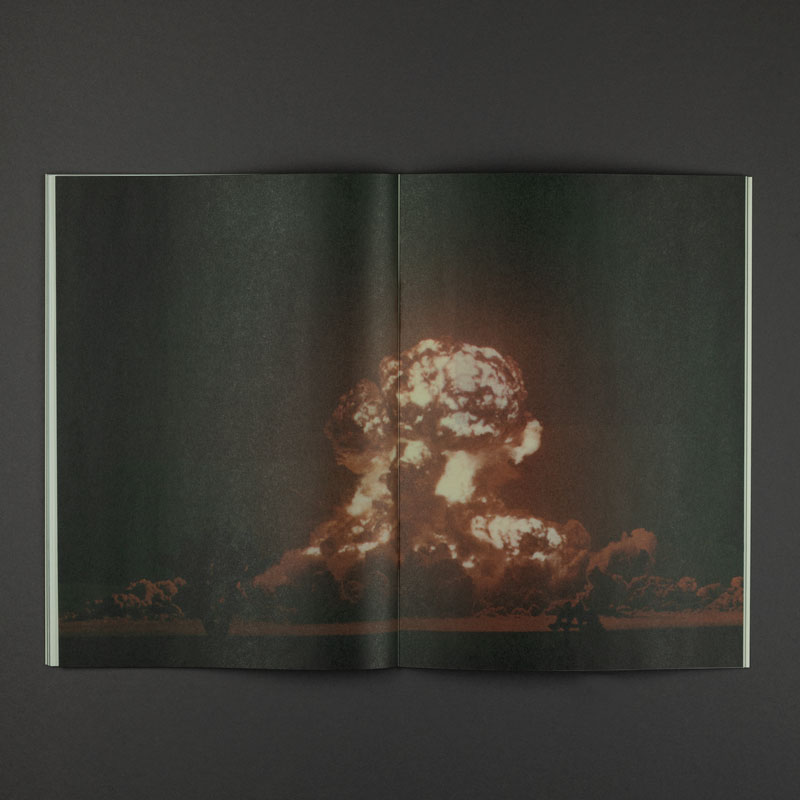
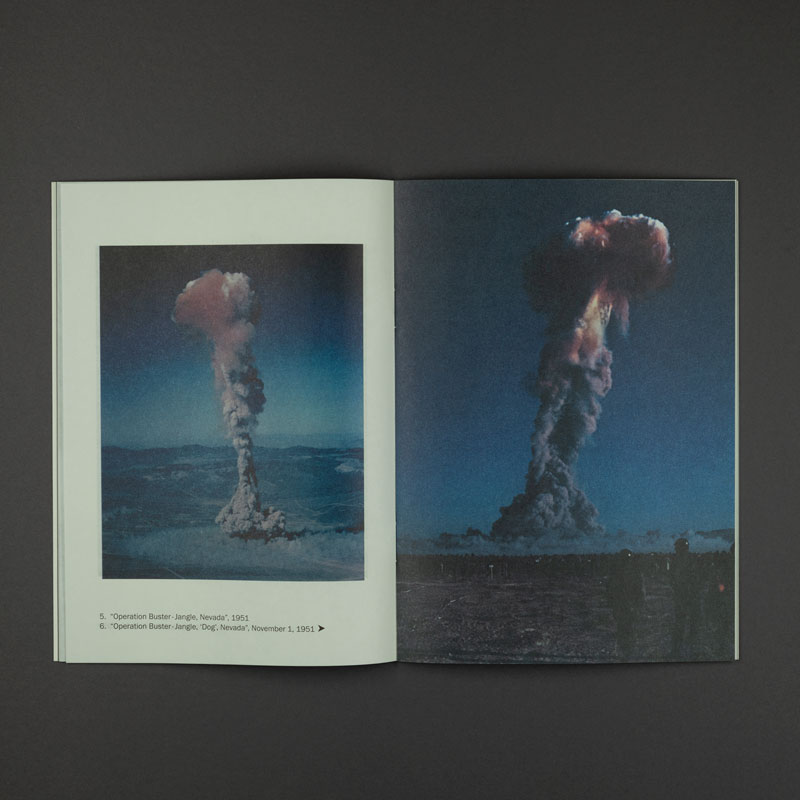
ATOM
In this collection we present rare 1940s and 1950s pictures of
nuclear bomb blasts. They vary from luminous, blazing explosions and
plumes of billowing smoke to an uncannily serene pastel mushroom
cloud.
The American nuclear tests of the mid 20th century took place in
Pacific waters and the deserts of the American Southwest. The United
States is known to have conducted more than 280 atmospheric and
underwater tests, until the Limited Test Ban Treaty with the Soviet
Union sent nuclear testing underground in 1962.
All together the USA conducted over one thousand nuclear explosions
until 1992.
Most of these vintage prints hail from the collection of a former AEC
(Atomic Energy Commission) employee. These photographs were
circulated within military and scientific communities, likely only
produced and given to high-ranking military personnel or scientists
for research purposes or simply as signs of appreciation for their
involvement in the tests.
Studies of the atom began centuries ago with philosophers
investigating the structure and nature of matter. To produce nuclear
weapons, to split the atom, is to intervene in the natural order of
things – an ultimate display of power.
While the prints were originally produced as visible evidence of
scientific research and military operations, the photographs are
unsettling for their aesthetic beauty. These world-changing weapons
have left their imprint both on history and on photographic paper.
There are glowing Ansco prints on white plastic film, Kodak color prints
and dye transfer prints, made with the most modern and avant-garde
methods of the time, which paved the way for later color printing
techniques.
Alongside the radiant color pictures, there is a stunning set of large
format black and white prints of nuclear tests in Bikini Atoll. An
unknown artist made these striking works by photographing the
originals.
Within this pamphlet are vintage silver gelatin press prints of the first
atomic test, known as the Trinity test, which happened in Alamogordo
New Mexico on July 16, 1945. A press slug on the reverse of one of
the photographs refers to the ‘dawn of the atomic age’ –the blinding
light of these explosions signalled our entrance into a new era.
The race for nuclear weapons was intertwined with the space
race – with the USA and the USSR competing for technological and
ideological supremacy. The enormity and horror of what unfolded
in the nuclear attacks on Japan make these pictures particularly
disturbing. The capacity of humans to both create and destroy is
embodied in these unusual photographs
Printed and bound by Pelo-Druck Lohner oHG
Paper content: Offset 60g/m2
Paper cover: Olin, Rough, cream, 200g/m2
36 pages, 25 images
15×21 cm, softcover
Editor: Daniel Blau
Authors: Carrie Foulkes

Christa Dichgans
February 12 — March 19, 2019
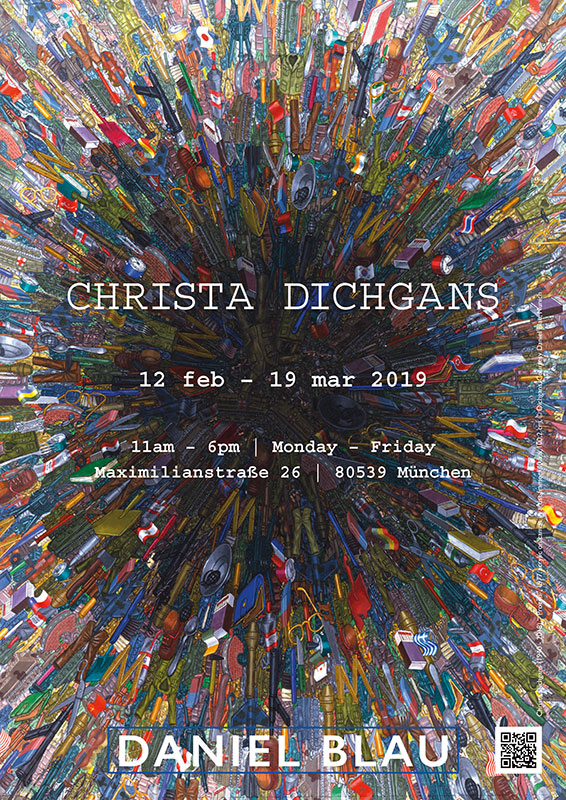
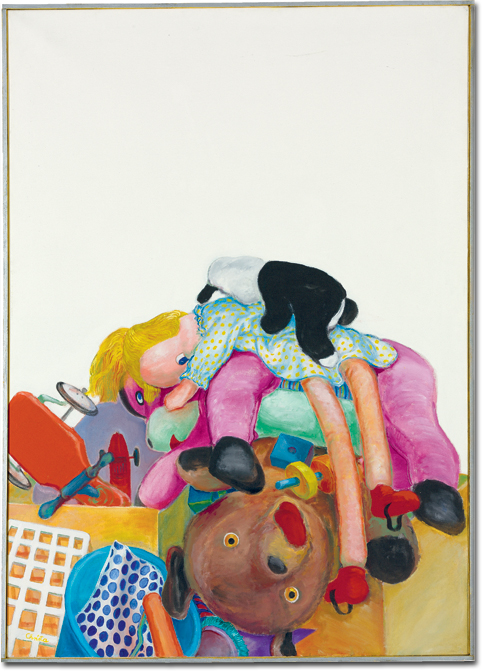
German artist Christa Dichgans (1940-2018) is known for her vibrant works on canvas that play on Surrealism and Pop painting.
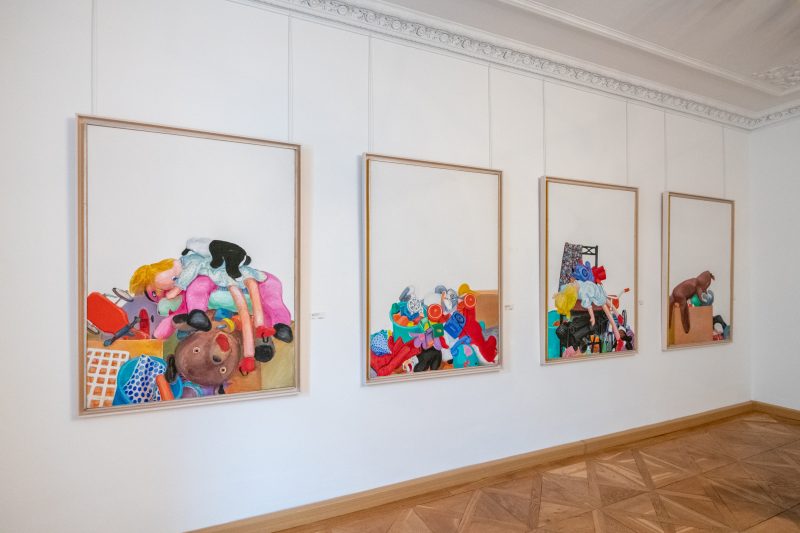
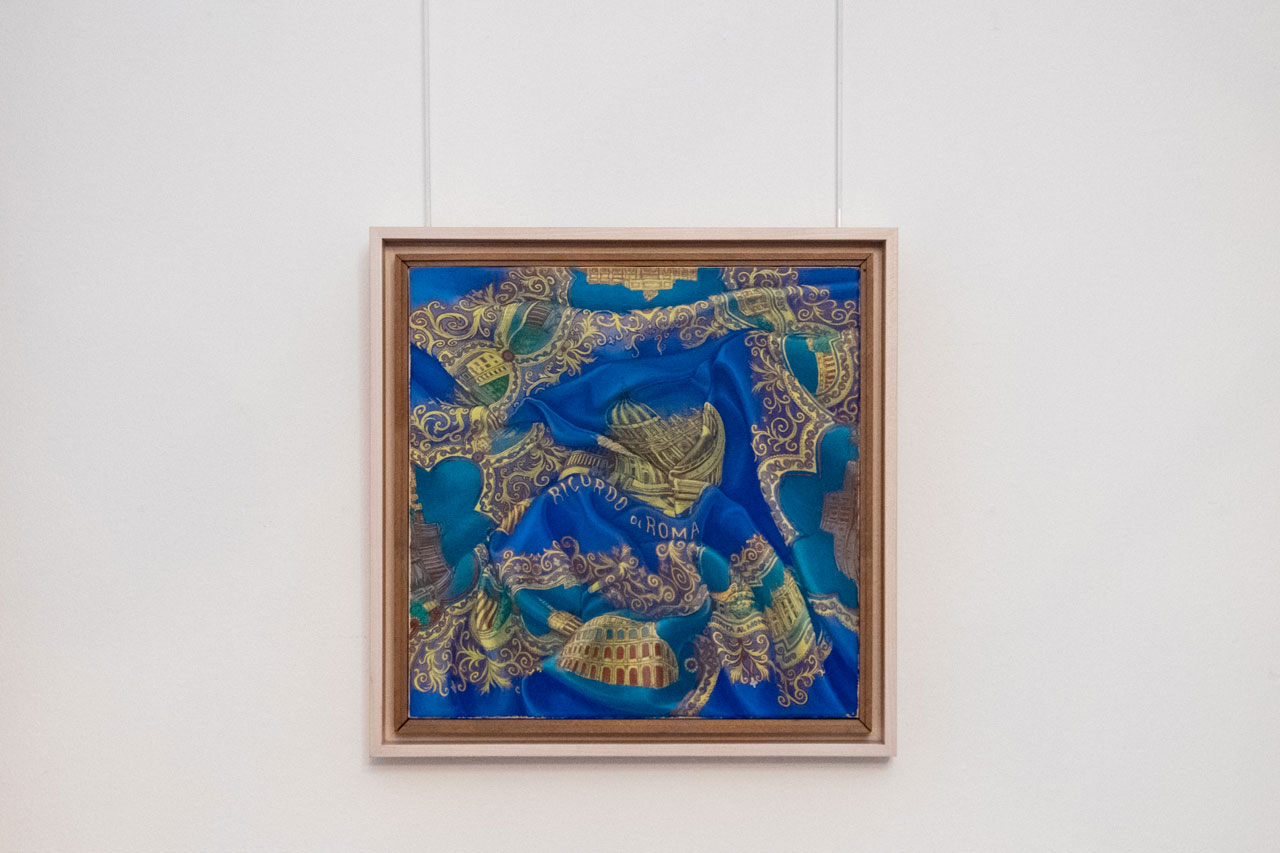
In celebration of her life and work, we are delighted to show a selection of her mysterious still life paintings from the 1960s and 70s.
Large-format acrylic paintings such as ‘Puppen und Tierchen – N.Y.’ (1967) show children’s toys piled in colourful heaps. Stuffed animals, dolls and plastic vehicles form uncanny compositions. These meticulous images of childhood detritus are personal and impersonal, playful and slightly unsettling.
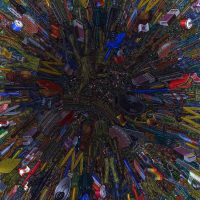
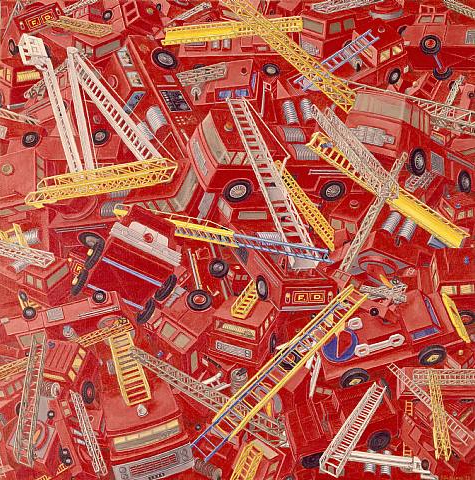
In ‘Feuerwehrhaufen’ (1972) we see a mound of plastic fire engines, seemingly discarded – a monument to mass-production.
In ‘Prozeß’ (1977) an assemblage of countless individual objects creates a mesmerising pattern, a crowded visual field of things that are at once recognisable and deeply strange. The painter has participated in national and international exhibitions and her work is held in numerous museums and collections including the Städel Museum and the Berlinische Galerie
Exhibition:
feb 12 – mar 26, 2019
11am – 6pm | mon-fri
Maximilianstraße 26, 80539 München

 +49 89 29 73 42