



Author: Christiane Wunsch
May 24, 2018 — June 21, 2018
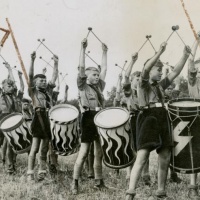
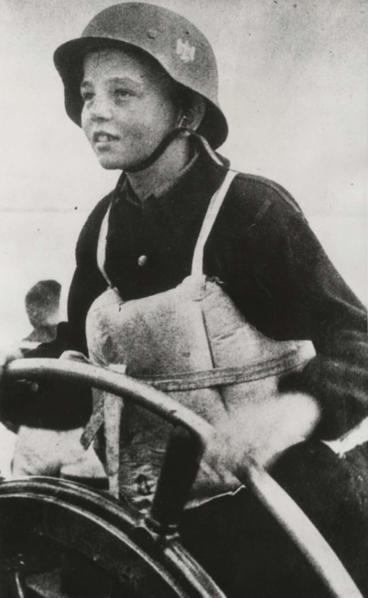
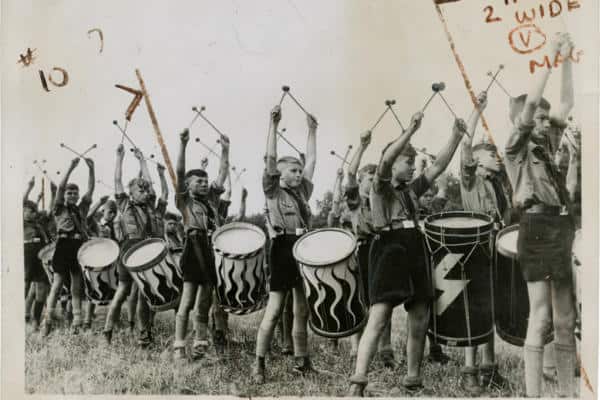
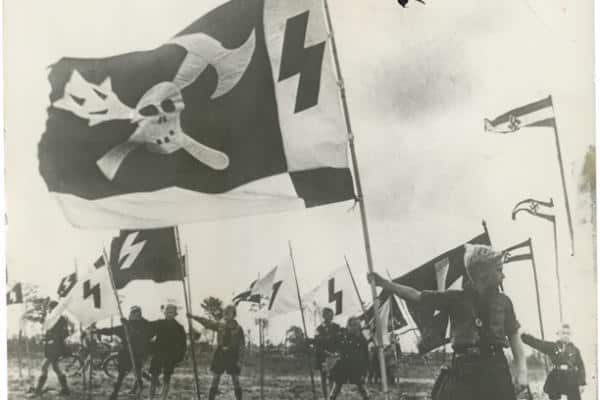
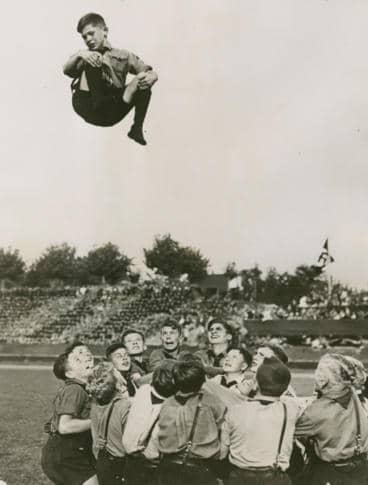
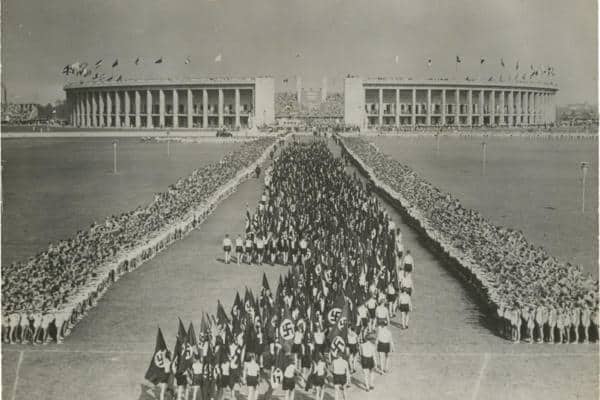
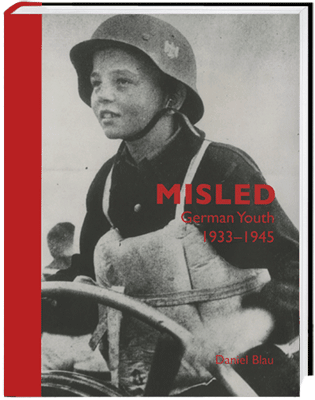
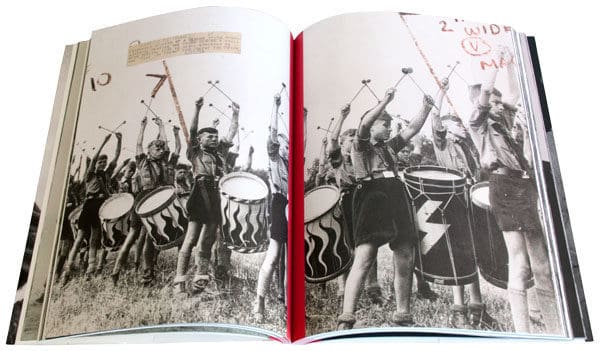
Misled illustrates the role of the youth during the Nazi regime 1933-45 in photographs and interviews. The pictures cover a range of themes from daily life and school outings to military exercise and training. Most of the photographs are here published for the first time. They were recently found in American photo archives where they had been stored since the war.
The lingering fingerprints of a world thrown into war are still visible, and rightly so. World War II set the foundation for the second half of the 20th century. Borders changed. Politics shifted. Bombs fell like rain, and the world witnessed the birth of the atomic age. World War II left humanity suffering and broken. Misled focuses on the experience of war through images and stories of German youth during the time of the Third Reich.
Included are transcriptions of conversations Daniel Blau had with eye-witnesses. In order to show the complex relationships between photojournalism, propaganda and the function of text, Daniel Blau’s interviews have been left unedited, which not only amplifies their youthful tone but also helps to further reflect on the function of (photo-)journalism.
Misled is an active conversation, in which the past and present experience one another.
192 pages, 83 illustrations (many on double pages),
25 × 18,5 cm, softcover
Verführt Deutsche Jugendliche 1933-1945
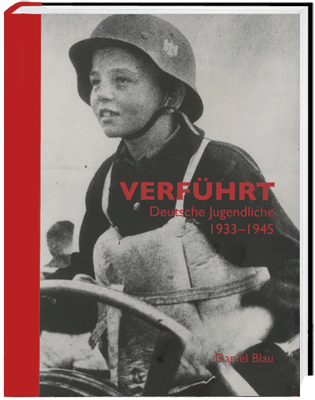
Verführt schlägt die Brücke zwischen Vergangenheit und Gegenwart. Einerseits historisch, lädt das Buch uns andererseits doch ein, die Photographien zu betrachten, die Geschichten zu hören und an den Gesprächen teilzuhaben. Erfahren Sie den Krieg aus dem Blickwinkel der Kinder. Verführt konzentriert sich auf Erfahrungen des Krieges in Bildern und Geschichten deutscher Kinder während der Zeit des “Dritten Reiches”. Die Auswahl von 83 Photographien, in der Zeit von 1933 bis 1945 aufgenommen, erzählt die Geschichte von Kindern, die in jener Zeit lebten und kämpften. Alle Aufnahmen wurden 1933-1945 gemacht und abgezogen. Allein die hektografierten und handschriftlichen Angaben auf der Rückseite der Photos geben jeweils Hinweis auf die Zeit und die Umgebung der Aufnahmen.
Die Texte sind Erinnerungen von Zeitzeugen.
Verführt ist ein Dialog, in dem sich die Vergangenheit und Gegenwart begegnen.
192 Seiten, 83 Abbildungen,
25 x 18,5 cm, softcover
Bestellen Sie hier Ihr Exemplar
Exhibition:
may 24 – june 21, 2018
11am – 6pm mon-fri
Maximilianstraße 26, 80539 München


June 14, 2018 — June 17, 2018
Messe Basel
For every Art enthusiast Art Basel is undoubtedly the highlight of the year.
It is becoming more and more difficult for art dealers to find good artworks outside of the many public collections and to convince collectors, estates or artists to part with them.
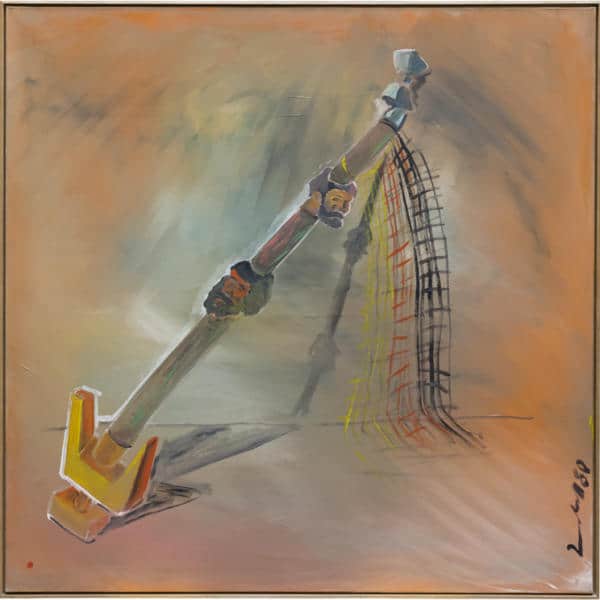
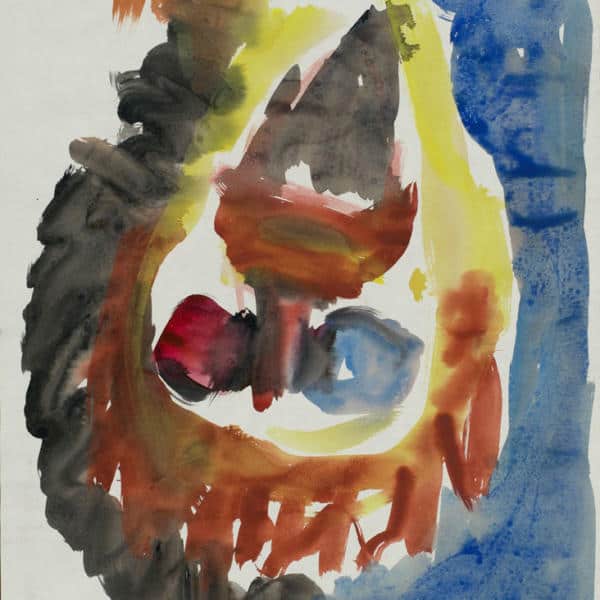
We are therefore delighted to be able to present a cabinet exhibition around the theme of “Portrait”. True to our specialisaton in works on paper, an exquisite group of Warhol drawings from the 1950s will completement a selection of 1970-80s works by Baselitz, Immendorff and Penck …
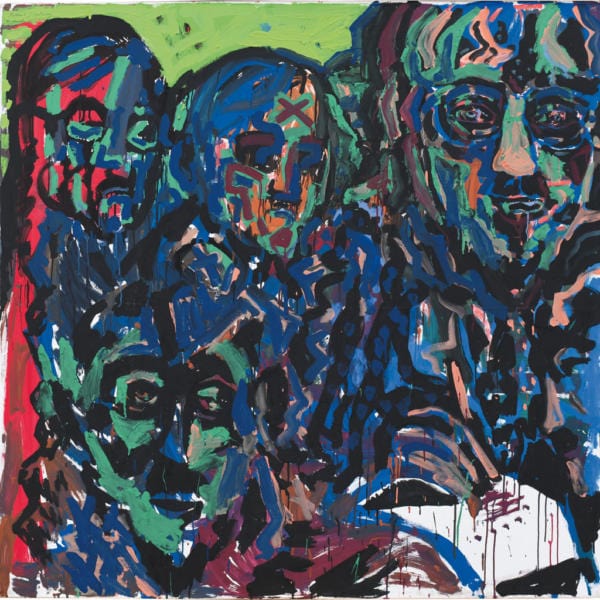
Penck was interested in portraiture as early as the 1960s when his friends and family became his subjects. We will show his 1974 painting of Johannes Gachnang, former director of the famous Kunsthalle in Bern and later publisher of many art books and catalogues raisonnés. He was a close friend and early supporter of Penck, giving him his first international museum exhibition at Kunsthalle Bern in 1975. This painting has never before been exhibited in public. This painting has been kept in a private collection since the 70s.
The painting “Fahne” (1980) by Jörg Immendorff reflects a similarly intense and friendly connection with Gachnang, since also Immendorff had his first international exhibition in Bern.
Another of our highlights is the complete sketch-pad (book) of portrait drawings made by Warhol in 1955, presumably at the “Serendipity Café” where he would meet with friends for drawing sessions. Only very few sketch‑pads survived intact, as Andy and later his estate would give or sell individual sheets from these pads. Here, in the “House of Hearts” we meet his friends face‑to‑face or even “au naturel” in Andy’s fresh and fluid ink drawings.
April 4, 2018 — May 17, 2018
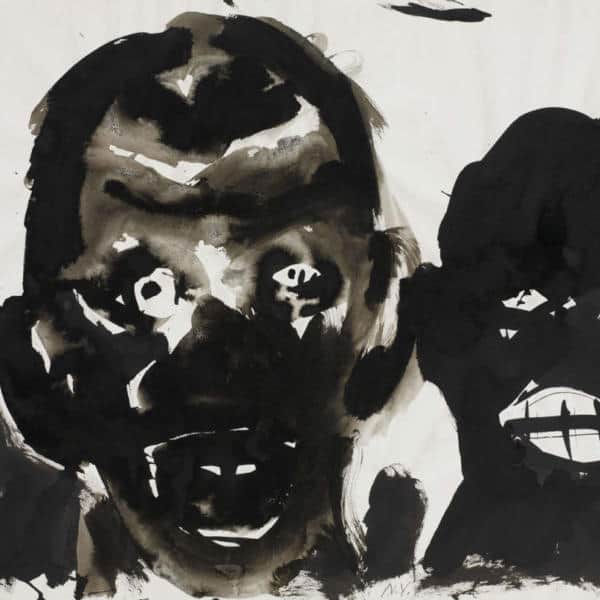
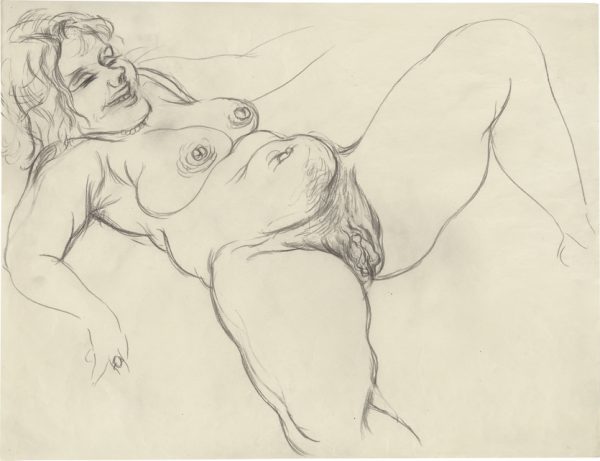
Daniel Blau is pleased to exhibit a selection of rare drawings by George Grosz (1893-1956). Taking as their subject the human form, these erotically charged and often explicit works on paper are presented to the public for the first time.
With eroticism reminiscent of Japanese shunga woodcuts, the drawings’ relationship to this Eastern print process is visible in the depictions of disproportionate human body parts. These large-format works by Grosz call to mind the grotesque yet compelling figures of Schiele, or the urgent marks of de Kooning.
Early in his career, Grosz developed his draughtsmanship by rendering the human form on paper – nudes, couples, threesomes and groups. These brazen drawings are unapologetically pornographic. Although prurient, the fine pencil lines and anatomical studies are the work of a dexterous penman. The pieces belong in the same family as works by Modern artists such as Mondrian, Kirchner and Bellmer, and bear a resemblance to the line drawings of later artists such as Warhol and Polke.
Grosz became known for his anti-war drawings and his social criticism. With his pen, pencil and palette he dissected the soul of Weimar Germany. The works on display were made in the late 1920s, before the artist’s emigration to the USA. They emerged between the two Great Wars, during a time that saw Grosz maturing as an artist as his work fluctuated between expressionistic social commentary and uninhibited libidinous fantasy.


February 16, 2018 — March 29, 2018
On the 75 year anniversary of the beginning of the Allied liberation of Europe
Daniel Blau presents an exhibition of works by renowned photojournalist Robert Capa.
Capa’s documentation of conflicts including the Spanish Civil War, the Second Sino-Japanese War and the Second World War gained him a reputation as a skilled photographer with a humanitarian sensitivity to the costs of war.
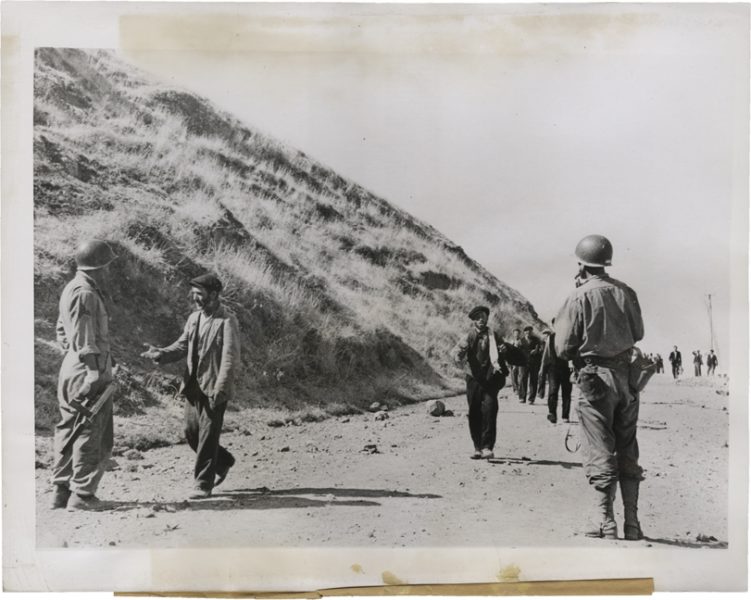
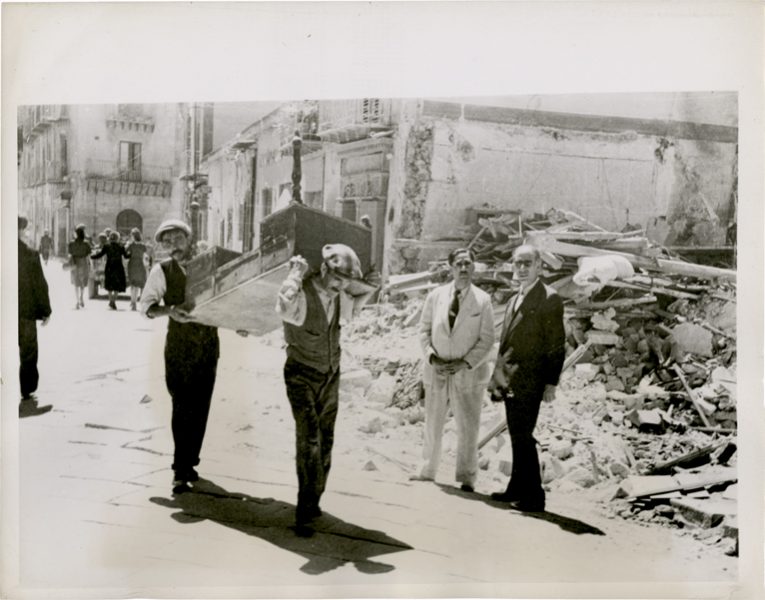
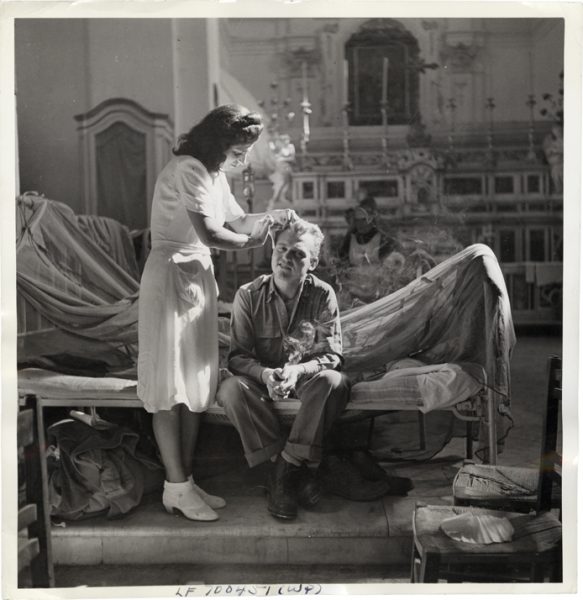
Capa was on the frontlines when the Allies freed Italy, beginning with Sicily in 1943, and our selection of pictures is taken from this particular moment of transition that saw the Germans retreating northwards through Italy.
The photographer was present during moments of surrender and documented encounters between American soldiers and local people. A powerful photograph of the aftermath of the Naples Post Office bombing, on view in our exhibition, encapsulates Capa’s ability to register complex events and the suffering of individuals within a broader narrative of unfolding conflict.
His compelling pictures illuminate the realities of war as experienced by civilians and soldiers and confirm his status as one of the foremost photojournalists of the 20th Century.
16 feb – 29 mar 2018
11am – 6 pm mon-fri
Maximilianstraße 26, 80539 München
May 4, 2018 — May 6, 2018
Booth F2 – Randall’s Island Park, NY 10035
More than 30 years after his death in 1987, Andy Warhol
remains one of the best-known and most influential figures in
contemporary art and culture. His paintings have become iconic,
his personality has attained cult status, his films are legendary,
and his forecast that in the future everyone would be famous
for fifteen minutes is our quotidian reality.
Continue reading “Frieze New York 2018”
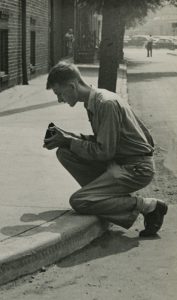
Born in Philadelphia, both sides of his family descended from late nineteenth century Lithuanian immigrants. Edward Wallowitch pursued his talent for photography early and began taking photos when he was just eleven. At the age of eighteen, he was the youngest photographer to be included in “The Family of Man”, Edward Steichen’s legendary exhibition held in 1955 at The Museum of Modern Art, meaning he was the youngest photographer ever to have prints in the Museum of Modern Art in New York. Two of them were taken with a Brownie box reflex camera while he was still at high school.
Wallowitch was a close friend of Andy Warhol in the 1950s and 60s in New York. By then he had moved from Philadelphia to Manhattan and had become an integral part of the Greenwich Village bohemia, alongside his brother John, and sister Anna Mae. Wallowitch produced a kind of poetic street photography with strong sensibility, showing a tender eye for both composition and texture. He spent a lot of his time photographing children and teenagers.
Many of Wallowitch’s pictures served as source material for Andy Warhol’s drawings. He died at the age of 48, cause of death unknown.
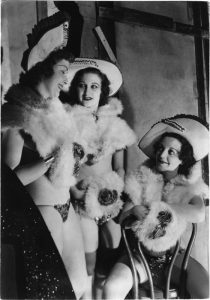
Margaret Bourke-White was a pioneering figure in 20th century documentary photography and is famous for her scenes of modern industry, of the Great Depression, and of political and social movements in the 1920s through 1950s.
As a founding mother of LIFE (she shot the first cover), she became a world-famous symbol of swashbuckling photography. And that she did it in a male world made her success even more spectacular.
During her unique career, Bourke-White was torpedoed in the Mediterranean, strafed by the Luftwaffe, stranded on an Arctic island, bombarded in Moscow, and pulled out of the Chesapeake when her chopper crashed. She was the first Western photographer to document Soviet industry after the revolution, to create a travelog of Czechoslovakia and other Balkan states just before Hitler moved in to ignite World War II, and to be stationed in Moscow just before Germany bombed its former ally.
Aggressive and relentless in pursuit of pictures, Bourke-White had the knack of being at the right place at the right time. For example, she interviewed and photographed Mohandas K. Gandhi a few hours before his assassination in India. And she was the only American photographer in the Soviet Union in 1941 while the battle for Moscow raged. Alfred Eisenstaedt, her friend and colleague, said she was great because there was no assignment, no picture that was unimportant to her. She was also credited for starting the first photo lab at LIFE.
As an artist, Bourke-White continued to use photography as an instrument to examine social issues from a humanitarian perspective.
She witnessed and documented some of the 20th century’s most notable moments, including the liberation of German concentration camps by General Patton in 1945, the release of Mahatma Gandhi from prison in 1946, and the effects of South African labor exploitation in the 1950s. She was a great and tenacious photographer. Her work was her life, and her life was flamboyantly spectacular. Her career was cut short in 1966 due to Parkinson’s disease, she died in 1971.
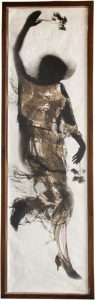
Floris Neusüss is a pioneer of photographic art, particularly known for cameraless techniques and photograms. Neusüss is drawn to this particular method of photography because, as he describes, “perspective and horizon are absent from photograms, so the space is theoretically unending.” He thinks of these more like paintings than photographs because he composes his works in a step-by-step process, and also modifies his prints with brushes or rags dipped in chemicals in painterly gestures. Neusüss is perhaps most famous for his full-body photograms, first shown in the 1960s, which resulted in monumentally sized prints. In the 1970s, he made his Nudograms, so named for their nude subjects. Neusüss draws inspiration from the work of Man Ray and László Moholy-Nagy.
Born in Lennep, Germany, in 1937, Neusüss has dedicated his whole career to extending the practice, study and teaching of the photogram. Alongside his work as an artist, he is known as an influential writer and teacher on camera-less photography. Neusüss brought renewed ambition to the photogram process, in both scale and visual treatment, with the Körperfotogramms (or whole-body photograms) that he first exhibited in the 1960s. Since that time, he has consistently explored the photogram‘s numerous technical, conceptual and visual possibilities.
His works often deal in opposites: black and white, shadow and light, movement and stillness, presence and absence, and in the translation of three dimensions into two. By removing objects from their physical context, Neusüss encourages the viewer to contemplate the essence of form. He creates a feeling of surreal detachment, a sense of disengagement from time and the physical world. Collectively, his images explore themes of mythology, history, nature and the subconscious.
Selected recent exhibitions
2017
Leibniz’ Lager. Sammlungswelten in Fotogrammen, ZKM Karlsruhe, Karlsruhe, Germany
2012
Traumbilder. Fotografien 1958 bis 1983, June 22 – Oct 14, Münchener Stadtmuseum, Germany
2011
A History of Camera-less Photography, Oct 13, 2010 – March 23, V&A Museum, London, UK
2008
Wunderkammer Museum, Deutsches Museum, Munich, Germany (solo)
November 27, 2017 — January 31, 2018
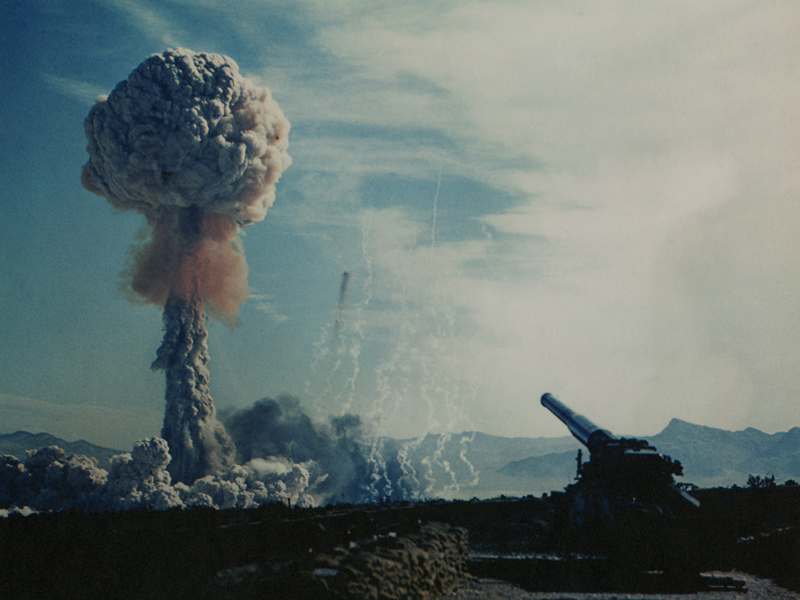
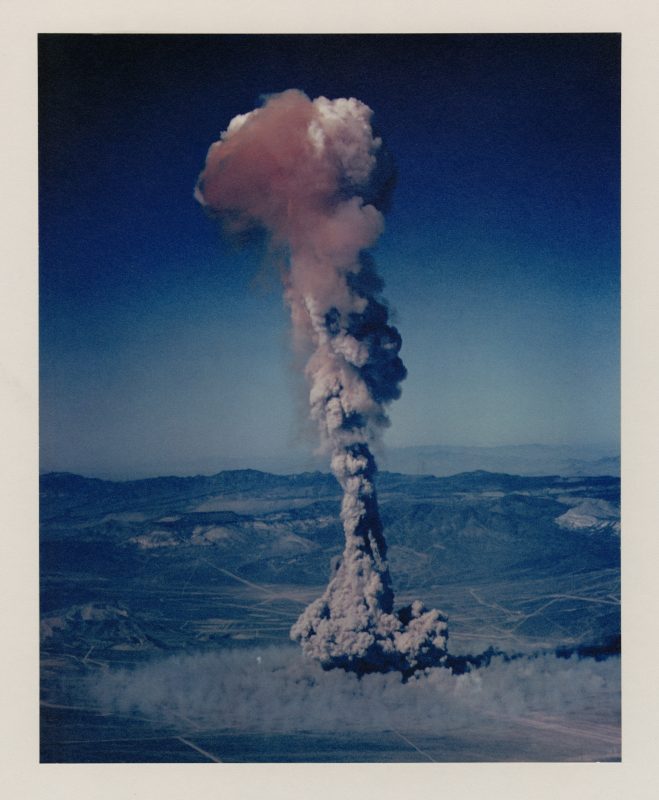
In this exhibition we present a set of photographs of extremes – beauty and destruction, impact and silence, underwater tests and aerial photos. These rarely shown photographs were taken in the 1940s and 50s and served the U.S. Navy during their nuclear weapon tests at sea in the Pacific Islands and in the Nevada desert. These documents have become artworks of importance and value. ‘Just Testing’ includes extraordinary large-format contactprints as well as colour dye-transfer process prints.
Their aesthetic and brilliance are today as striking as they were half a century ago – and their topicality and incendiary nature is undisputed.
See here the introduction presented by Daniel Blau:

 +49 89 29 73 42