



Author: dblauadmin
Exhibitions and Distinctions (Selection)
2011
Galerie Daniel Blau, Munich
2010
Centre Pompidou, Paris
2008
Gemeentemuseum Den Haag. MoMA, New York
2007
Irish Museum of Modern Art, Dublin
2006
Acquavella Galleries, New York
2005
Museo Correr, Venice
2004
National Gallery of Modern Art, Scotland, Edinburgh
2003
Museum of Contemporary Art, Los Angeles. Fundació la Caixa, Barcelona, Spain. Museum of Contemporary Art, Los Angeles, CA
2002
Tate Britain, London. Städtisches Kunstmuseum Spendhaus and Jerg-Ratgeb-Preis Reutlingen
2001
Museum für Moderne Kunst, Frankfurt
1999
Yale Center for British Art, New Haven, CT. Marlborough Graphics, London
1998
Tate Gallery, London
1997
Rubenspreis, Siegen
1993
Order of Merit, London
1987/88
Retrospective exhibition: Hirshhorn Museum and Sculpture Garden, Washington DC, travelling to Paris, London and Berlin. 1989 shortlisted for the Turner Prize.
1987
Selects The Artist’s Eye exhibition at the National Gallery, London
1983
Created Companion of Honour
1976
The Human Clay, Hayward Gallery, London
1974
first retrospective exhibition, Arts Council of Great Britain at the Hayward Gallery, London
1954
Biennale in Venice (with Francis Bacon)
1951
Arts Council Price
1944
The Painter’s Room, Alex Reid & Lefevre Gallery, London
Literature (Selection)
Hirmer/Daniel Blau (.ed), Lucian Freud, Portraits, Germany 2011
Lucian Freud – L’Atelier, Centre Pompidou, Paris 2010
Robert Hughes, Lucian Freud – Gemälde, London 2007
Eva-Marie Blattner, Lucian Freud, Graphik – Prints, Reutlingen 2002
Lucian Freud, Rolf Lauter, Naked Portraits, Ostfildern-Ruit 2001
Ursula Blanchebarbe, Lucian Freud, Reutlingen Bielefeld 1997
Robert Hughes, Lucian Freud – Paintings, London 1989
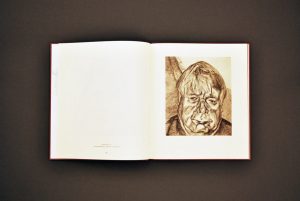
May 5, 2011 – June 3, 2011
“The bare facts speak for themselves: born in Berlin in 1922 and now generally regarded as the greatest living English painter, espeialle of people, both female and male. The artist’s father Ernst Ludwig Freud, a German architect, was the son of the great Sigmund Freud. After his fathers’s death in London in 1970, Lucian commenced a remarkable series of paintings of his mother Lucie Brasch, around ten in all, as well as a munber of drawings and etchings. Lucie was the daughter of a prosperous grain merchant from the Baltic coast and what is perhaps one of the earliest of these head-and shoulder paintings foms the centrepiece in this exhibition. The painting seems to anticipate what is certainly the finest – and in England most controversial – portrait of Quenn Elizabetg II, a similarly small, head-and-shoulder depiction of a great, if stern, mother figure.
The faces of Freud’s sitters nearly always exude a sense of inward reflection. They seem lost in their own reverie which the artist constantly observes and describes. For Lucian Freud flattery is never an issue, nor is moral judgement nor psychological analysis. There is also no sense of caricature or mockery at the human condition either, as one might find in the work of the artist Otto Dix. Wheter the sitter is staring at the artistm looking down or even looking away, an almost inevitable sense of melancholy prevails, as the artist captures what in essence is a fleeting and ephemeral moment – paradoxically over as many as a hundred sittings – immortalised on that unpredictable path from one instance to the next. That is perhaps part of the beauty and attraction of all attempts at painting or drawing reality and the special quality of psychological portraiture.” – Exerpt from the essay by Norman Rosenthal, published in Lucian Freud: Portraits, Hirmer/Daniel Blau(ed.), Germany, 2011.
April 7, 2011 – April 30, 2011
“Though the poetics of the atomic sublime might reassuringly couch its explosive potential in the language of nature, still it was a product of man, of culture.”
This inaugural exhibition at Daniel Blau’s London gallery makes a particular statement about the development and positioning of vintage photography. We wish to present you with an historically grounded, extraordinarily beautiful set of photographs that have come to stand as powerful visual icons, representing a salient period of international politics: The Cold War.
The image of the atomic bomb is one of unique and horrific beauty: The pictures of atomic bomb explosions – ranging from New Mexico USA, to the actual and affecting George R. Caron photographs shot from a military plane over Hiroshima – stand as representations of the difference between sublime artwork and frightful document.
This exhibition incorporates a variety of photographs, including US Navy and Air Force images of nuclear bomb tests by Edgerton and Eyerman – the former a scientific photographer and the latter with tendencies towards surrealism. This unique and historic collection of images span the period 1945 – 1970 to form a visual narrative full of power, horror and agressive beauty.
This exhibition is accompanied by a 48-page newspaper publication available from the gallery.
November 17, 2010 — November 21, 2010
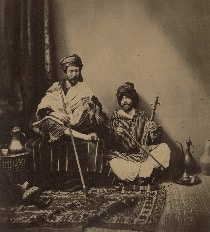
As a parallel exhibition to Hippolyte Bayard, Photography and the Spirit in Paris, we will show unusual and rare portraits from the 1850’s by artists such as Roger Fenton, Charles Marville and Charles Nègre at Paris Photo.
–
PARIS PHOTO 2010 | www.parisphoto.com
Venue: Carrousel du Louvre, 99 rue de Rivoli, 75001 Paris, France
November 16, 2010 — November 27, 2010
In the gallery exhibition at Galerie Meyer, Daniel Blau Photography will be showing a marvellous collection of recently discovered prints: A Bayard direct positive from 1839 will be on view, as well as some of the earliest known salt prints from glass negatives (1849).
–
GALERIE MEYER – OCEANIC ART
Venue: 17 rue des Beaux-Arts, 75006 Paris, France
November 14, 2007 – November 18, 2007
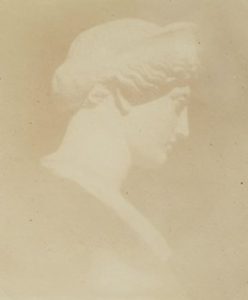
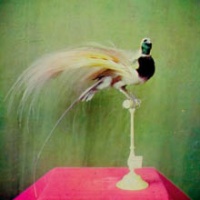
Galerie Daniel Blau is proud to announce the exhibition “Autochromes — The Rise of Colour Photography” at Galerie Meyer, Rue des Beaux Arts, Paris.
100 years have now passed since the first commercially applicable method of colour photography was introduced. The method of colouring potato starch and making it light sensitive was publicized by the Lumière brothers in 1907 under the name “Autochrome”. Fixed on a glass-plate, this process resulted in the first coloured photographs one century ago. The variable grain in Autochromes is still of central importance to today’s photography — digital photography, colour printing and silk screens are based on it.
Even in their early stages, Autochromes were compared to the paintings of the pointilists and one can not help but be reminded of works of impressionism when taking in the strength of the colours and the painting-like depth of these impressions on glass.
This important collection, assembled over many years from dealers and fellow collectors worldwide, is now on view to the public for the first time. Using especially designed presentation frames, Daniel Blau will be exhibiting his significant collection of Autochromes, dating from 1895 to 1920, in the exhibition rooms of Galerie Meyer. Among other photographers, the images of such famous artists as Lumière, Gimpel and Knott will be shown. Atmospheric scenes of Parisian alleys hang by lively squares; large parks by lonely ruins; rugged cliffs can be viewed alongside calm ocean bays, while the intimate effect of the intense colours draws the viewer in.
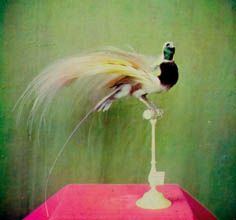
Published by Daniel Blau, 2010. Printed by Peschke Druck. Edition of 1000.
Introductory essay by Eugenia Parry.
ISBN: 978-3-00-030234-3
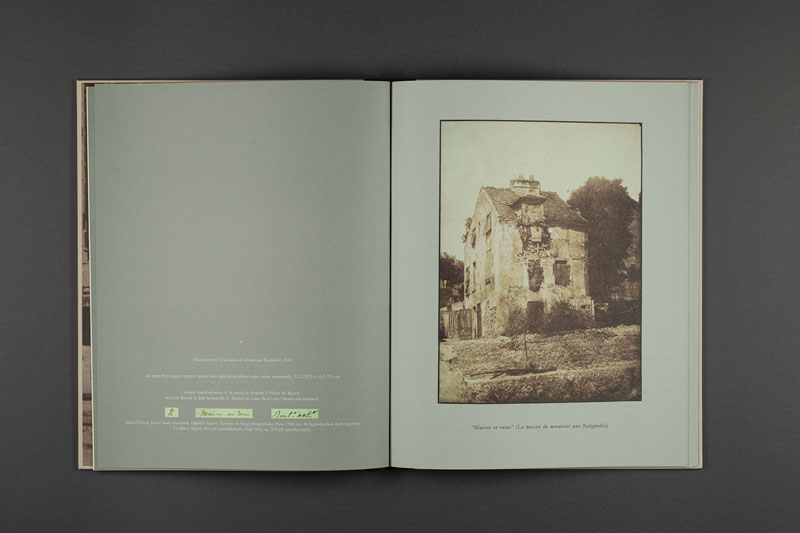
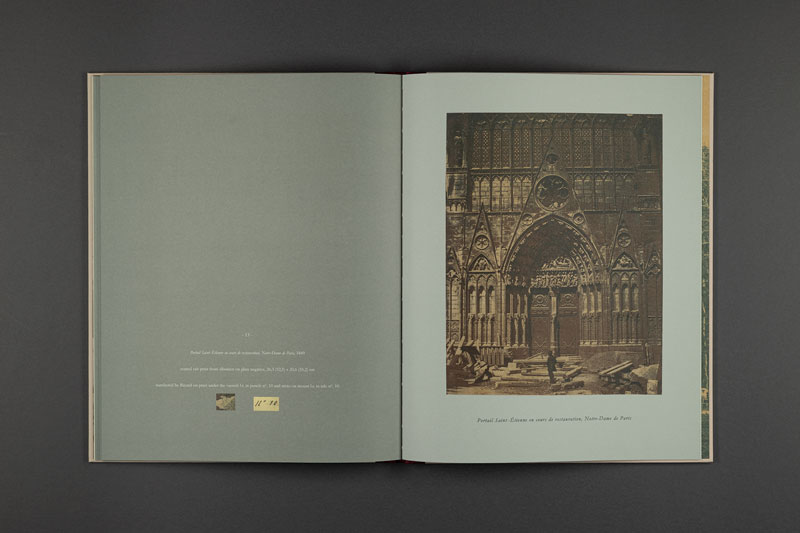
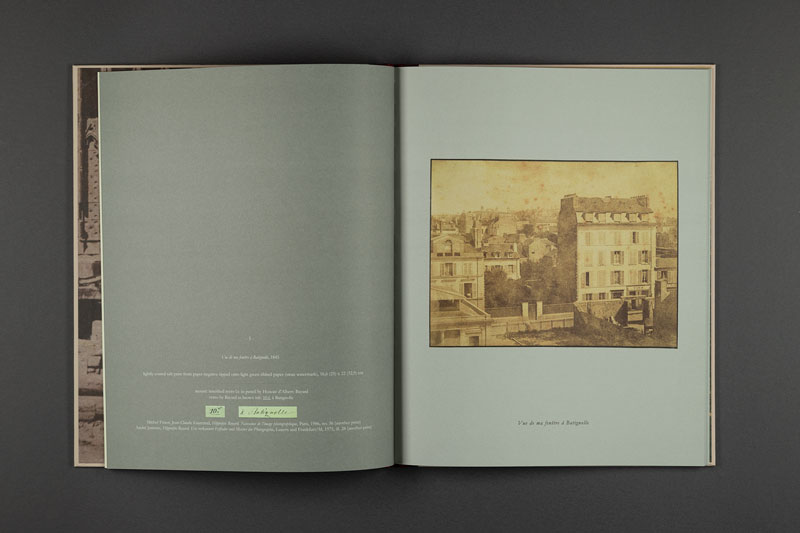
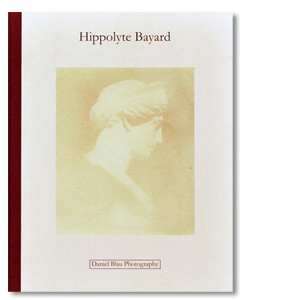
Catalogue published by Galerie Daniel Blau, 2010, with essays by Fabrice Hergott and Sir Norman Rosenthal.
15 x 21 cm, 70 pages, paperback,
printed by Peschke Druck in an edition of 1500
ISBN: 978-3-00-032490-1
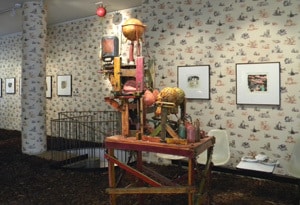
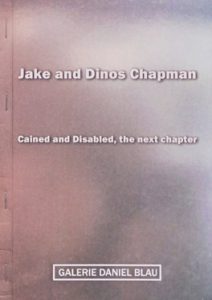
Published by Galerie Daniel Blau, 2009.
ISBN: 978-3-00-028407-6
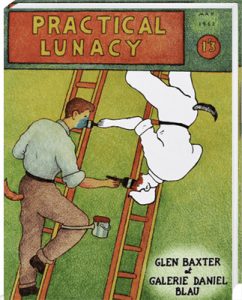
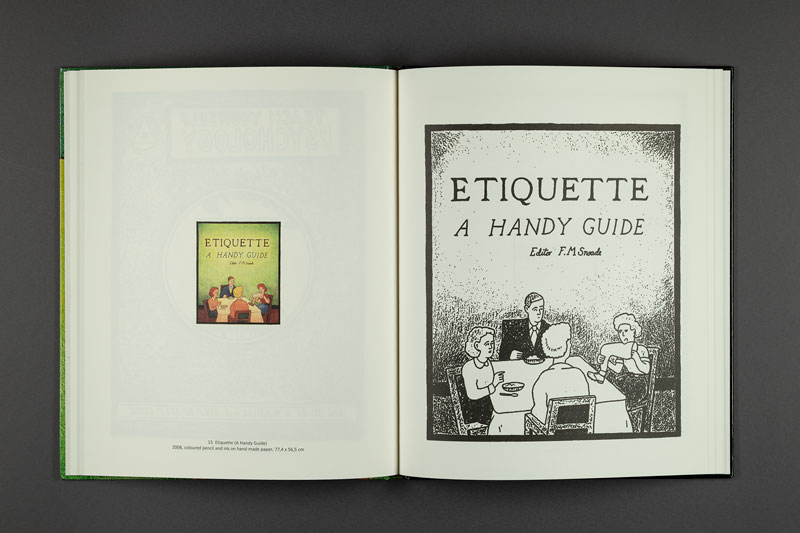
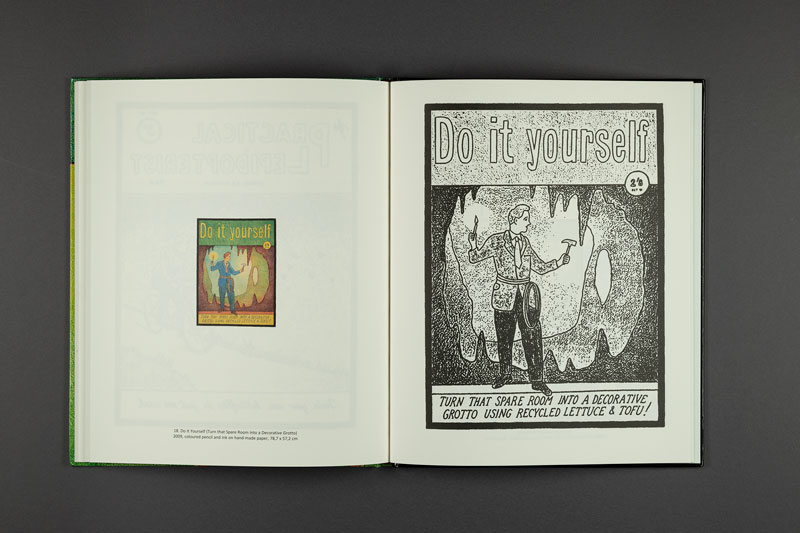
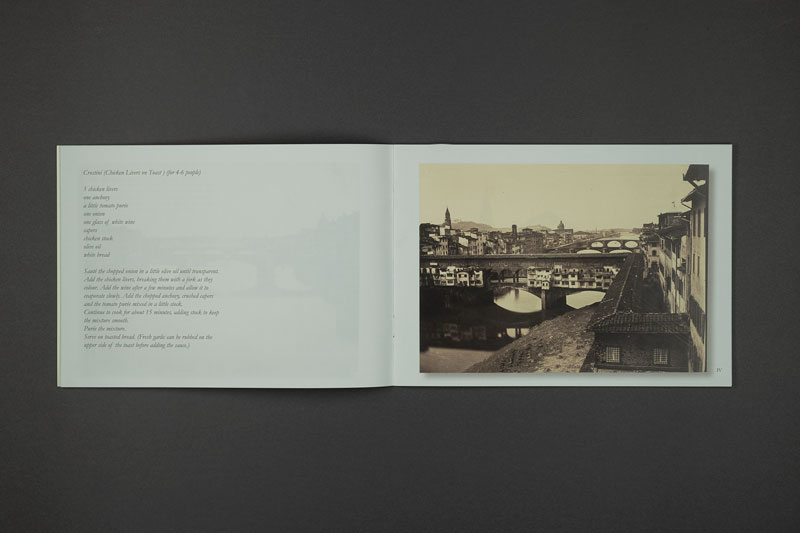
An album of photographs taken in Tuscany 1852-1855. With a selection of typical Tuscan recipes!
Published by Daniel Blau, 2009. Printed in Germany by Holzmann Druck GmbH & Co KG. Edition of 2000.
ISBN: 978-3-00-029161-6

 +49 89 29 73 42